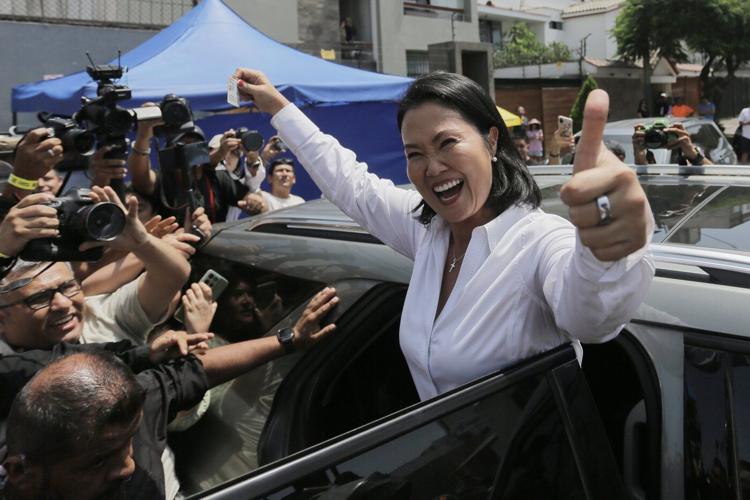
Keiko Fujimori, presidential candidate of the Popular Force party, departs a polling station after voting during general elections in Lima, Peru, Sunday, April 12, 2026. (AP Photo/Gerardo Marin)
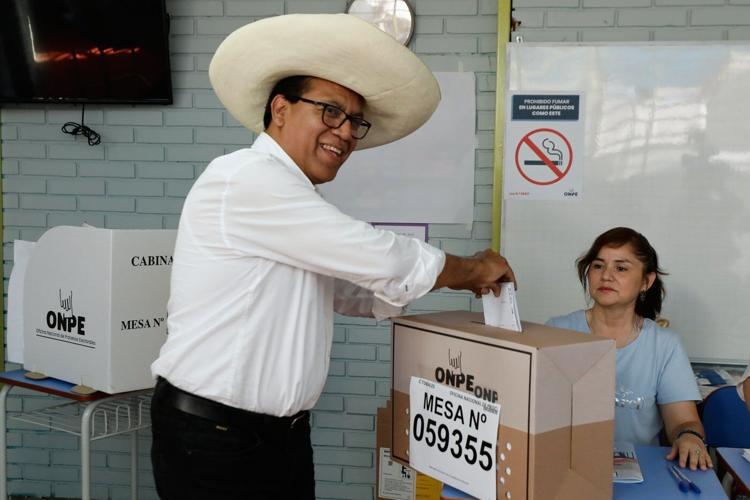
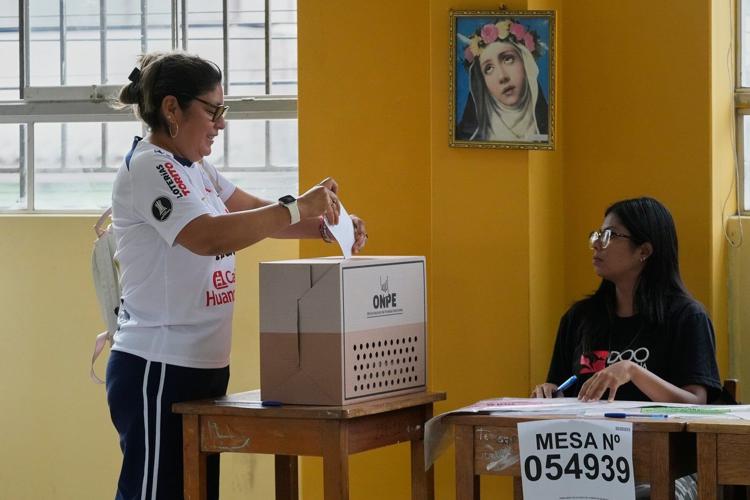
Roberto Sanchez, presidential candidate of Together for Peru party, votes during general elections in Lima, Peru, Sunday, April 12, 2026. (AP Photo/Isabel Dueñas)
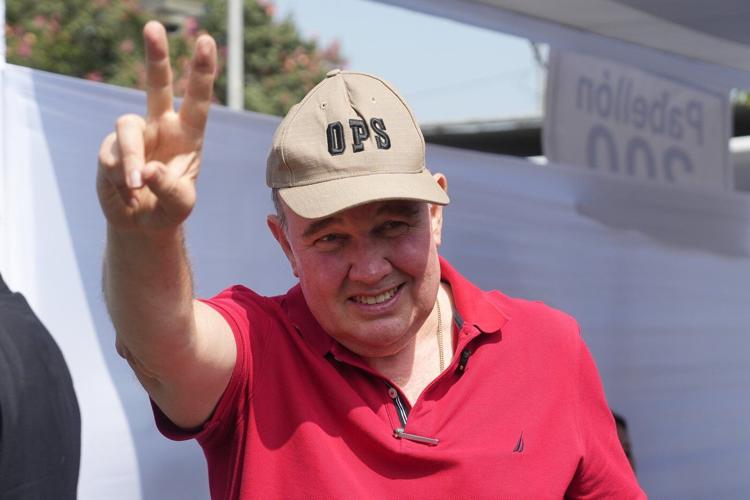
Rafael Lopez Aliaga, presidential candidate of the Popular Renewal party, makes a victory sign at a polling station during general elections in Lima, Peru, on Sunday, April 12, 2026. (AP Photo/Guadalupe Pardo)
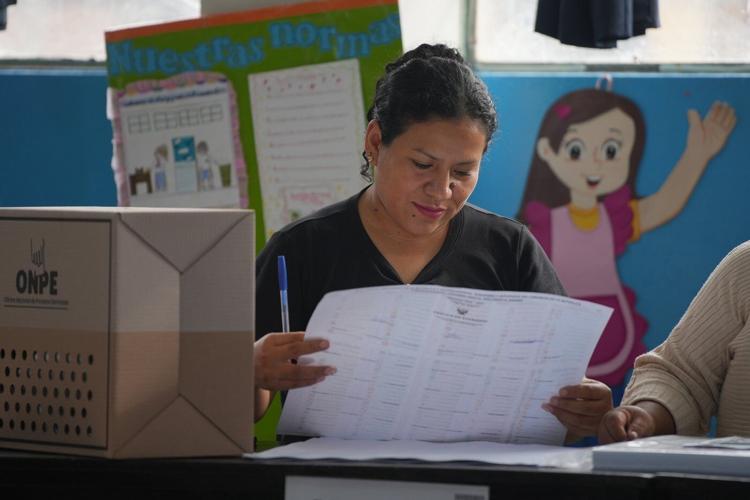
An election official checks voter lists as voting resumes at polling stations affected by delays and logistical problems during general elections in Lima, Peru, Monday, April 13, 2026. (AP Photo/Guadalupe Pardo)
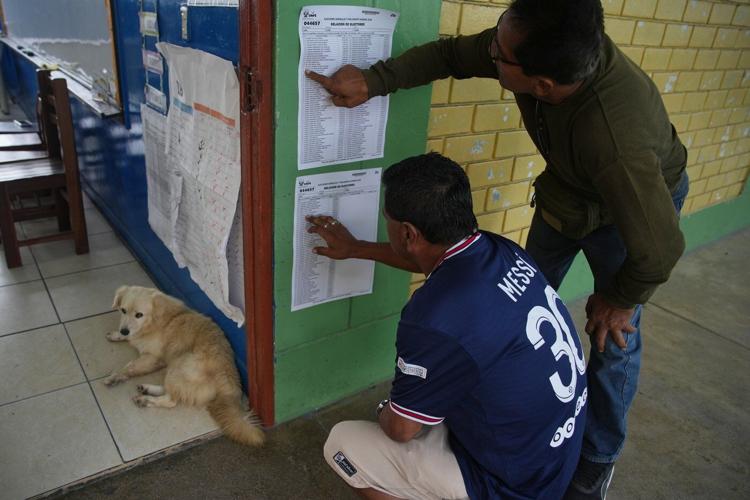
Voters check the rolls as voting in the general election resumes at polling stations affected by delays and logistical problems in Lima, Peru, Monday, April 13, 2026. (AP Photo/Guadalupe Pardo)
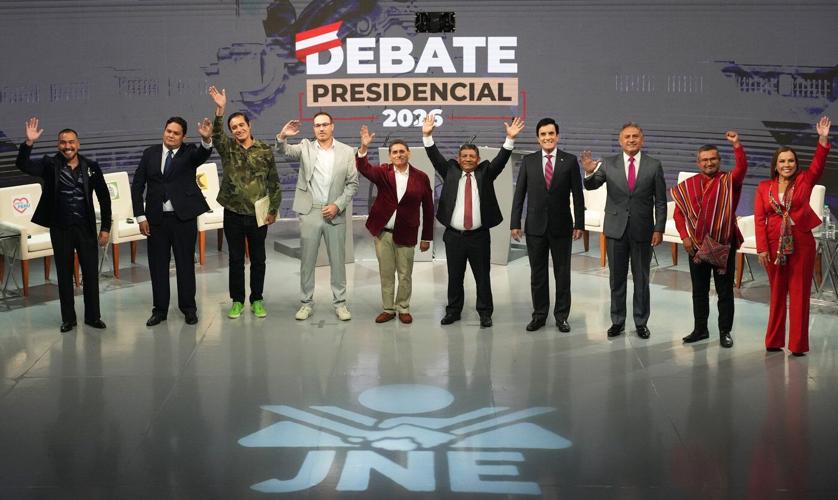
From left, presidential candidates Alvaro Paz de la Barra, Enrique Valderrama, Alex Gonzales, George Forsyth, Carlos Alvarez, Walter Chirinos, Carlos Espa, Carlos Jaico, Ronald Atencio, Fiorella Molinelli wave to reporters upon arriving at a presidential debate ahead of the April 12 election in Lima, Peru, Monday, March 30, 2026. (AP Photo/Guadalupe Pardo)
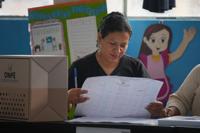
A woman votes as polling resumes at a station affected by delays and logistical problems during general elections in Lima, Peru, Monday, April 13, 2026. (AP Photo/Martin Mejia)
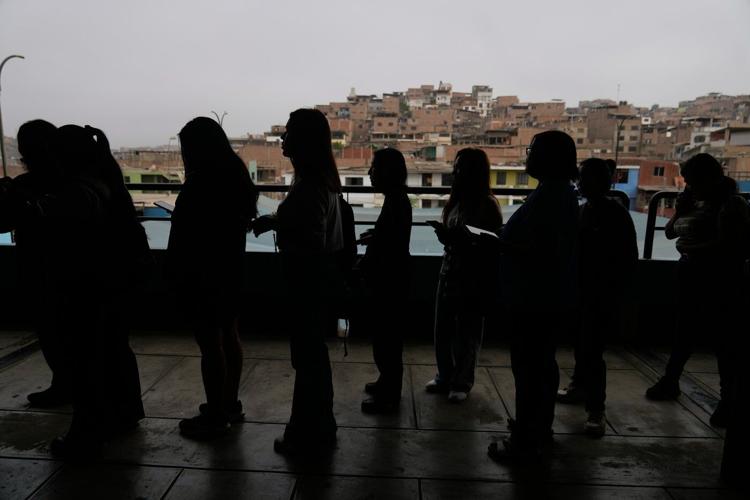
Voters line up as voting resumes at a polling stations affected by delays during general elections in Lima, Peru, Monday, April 13, 2026. (AP Photo/Martin Mejia)
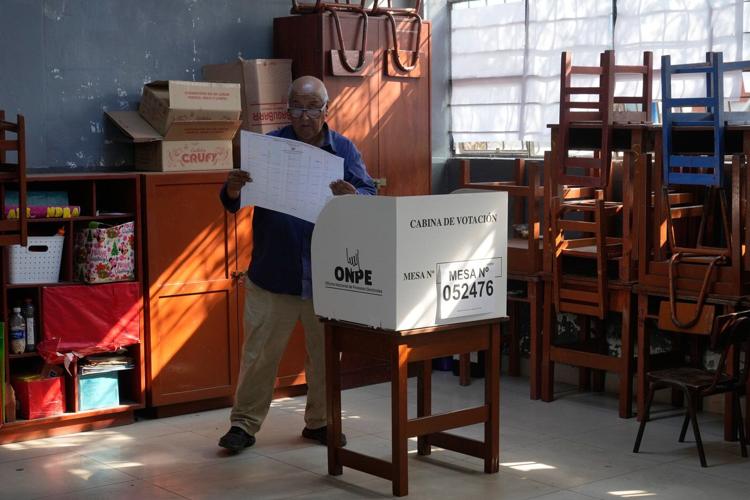
A voter looks at a ballot before marking his candidates during general elections in Lima, Peru, on Sunday, April 12, 2026. (AP Photo/Martin Mejia)
RM
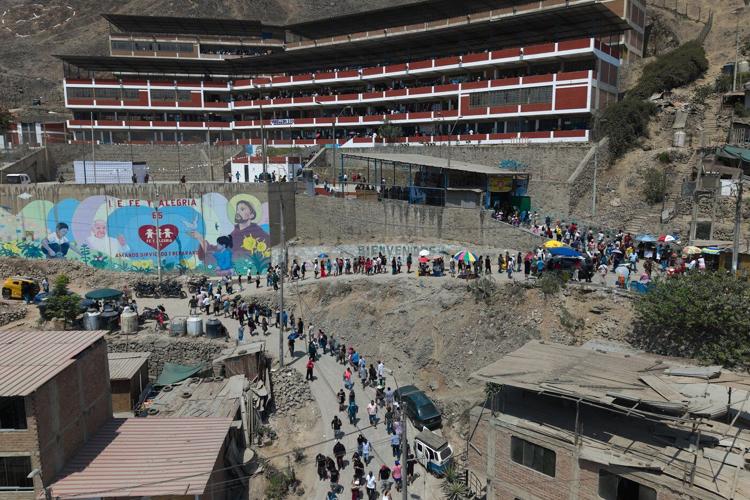
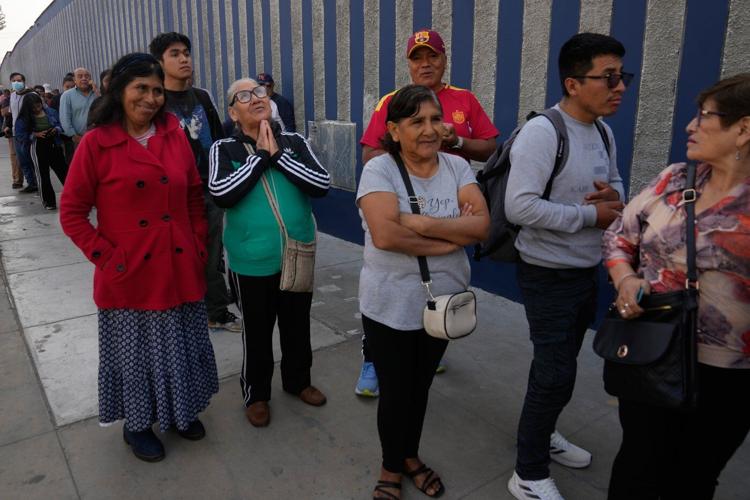
Voters line up outside a polling station during general elections in Lima, Peru, Sunday, April 12, 2026. (AP Photo/Guadalupe Pardo)
RM
Keiko Fujimori, presidential candidate of the Popular Force party, departs a polling station after voting during general elections in Lima, Peru, Sunday, April 12, 2026. (AP Photo/Gerardo Marin)
RM
Voters line up at a polling station during general elections in Lima, Peru, Sunday, April 12, 2026. (AP Photo/Martin Mejia)
RM
Roberto Sanchez, presidential candidate of Together for Peru party, votes during general elections in Lima, Peru, Sunday, April 12, 2026. (AP Photo/Isabel Dueñas)
RM
Rafael Lopez Aliaga, presidential candidate of the Popular Renewal party, makes a victory sign at a polling station during general elections in Lima, Peru, on Sunday, April 12, 2026. (AP Photo/Guadalupe Pardo)
RM
An election official checks voter lists as voting resumes at polling stations affected by delays and logistical problems during general elections in Lima, Peru, Monday, April 13, 2026. (AP Photo/Guadalupe Pardo)
RM
Voters check the rolls as voting in the general election resumes at polling stations affected by delays and logistical problems in Lima, Peru, Monday, April 13, 2026. (AP Photo/Guadalupe Pardo)
RM
From left, presidential candidates Alvaro Paz de la Barra, Enrique Valderrama, Alex Gonzales, George Forsyth, Carlos Alvarez, Walter Chirinos, Carlos Espa, Carlos Jaico, Ronald Atencio, Fiorella Molinelli wave to reporters upon arriving at a presidential debate ahead of the April 12 election in Lima, Peru, Monday, March 30, 2026. (AP Photo/Guadalupe Pardo)
MM
A woman votes as polling resumes at a station affected by delays and logistical problems during general elections in Lima, Peru, Monday, April 13, 2026. (AP Photo/Martin Mejia)
RM
Voters line up as voting resumes at a polling stations affected by delays during general elections in Lima, Peru, Monday, April 13, 2026. (AP Photo/Martin Mejia)
LIMA, Peru (AP) — Peruvians still did not know Monday night the outcome of Sunday's presidential election after the failure to deliver ballots to voting centers forced authorities to extend voting by a day, but early results showed two right-wing candidates were ahead.
, the conservative daughter of a , and Rafael López Aliaga, the ultra conservative former mayor of Peru’s capital, Lima, lead the pack of 35 candidates with 62% of ballots tallied. Official results showed Fujimori had received 16.88% of the votes tallied, while López Aliaga earned 13.88%.
Electoral authorities counted votes throughout Monday even though thousands of Peruvians were back at the polls for a . Authorities granted the one-day extension for more than 52,000 voters in Lima as well as to Peruvians registered to vote in Orlando, Florida, and Paterson, New Jersey.
Voting is mandatory for Peruvians from the ages of 18 to 70. Failure to do so comes with a fine of up to $32.
“I’m fed up,� Iris Valle, 56, said as she waited to vote Monday at a public school in Lima. She feared that her employer would cut her pay for not showing up early because she had to meet her voting obligation.
A presidential candidate needs more than 50% of votes to win outright. However, a runoff in June is virtually assured given the deeply divided electorate and the pool of candidates, the largest in the Andean country’s history. The winner will be Peru’s .
The election took place amid and corruption that has fueled widespread discontent among voters, who largely view candidates as dishonest and unprepared for the presidency.
Many of the contenders responded to the crime concerns with wide-ranging proposals, including building megaprisons, restricting food for prisoners and reinstating the death penalty for serious crimes.
Peru’s economy, however, has defied both the crime surge and the political instability stemming from a revolving door of presidents, having had three since October alone. Aided by its status as the world’s second-largest copper producer, the country posted more than 3% growth in 2024 and 2025.
In her fourth bid for the presidency, Fujimori has promised to crack down on crime with an iron fist, but she has also defended laws that experts say make it difficult to prosecute criminals. The laws, which her party backed in recent years, eliminated preliminary detention in certain cases and raised the threshold for seizing criminal assets.
If elected, she has said judges presiding over criminal cases will be anonymous and prisoners will have to work to earn their food.
Meanwhile, López Aliaga has proposed building prisons in the country’s , allowing judges to conceal their identities and expelling foreigners who are living illegally in Peru.
Voters were also asked to choose the members of a bicameral Congress for the first time in more than 30 years, following recent legislative reforms that concentrate significant power in the new upper chamber.
___
Garcia Cano reported from Caracas, Venezuela.
___
Follow AP’s coverage of Latin America and the Caribbean at