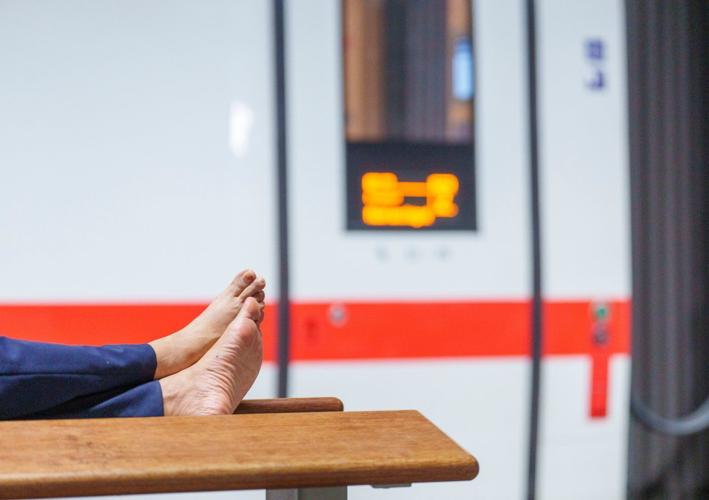
A commuter stretches out on a bench at Frankfurt's main station, Tuesday, June 23, 2026, after a communications system failure forced Germany's railway system to suspend train service. (Andreas Arnold/dpa via AP)
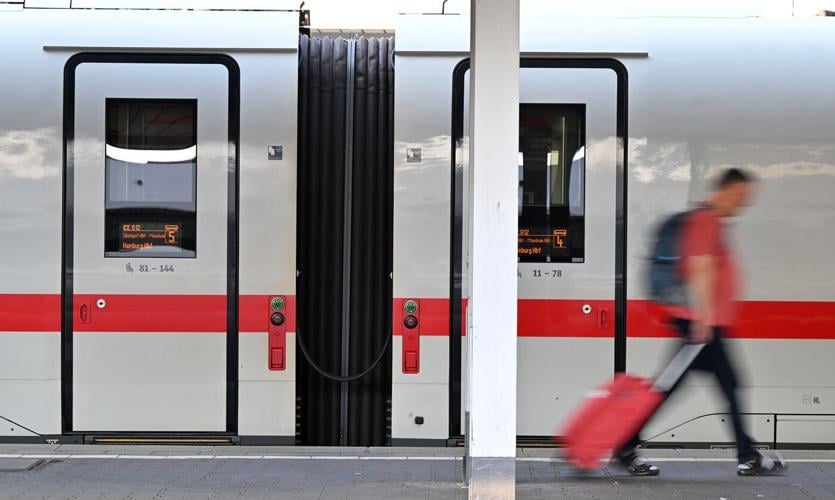
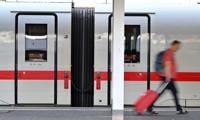
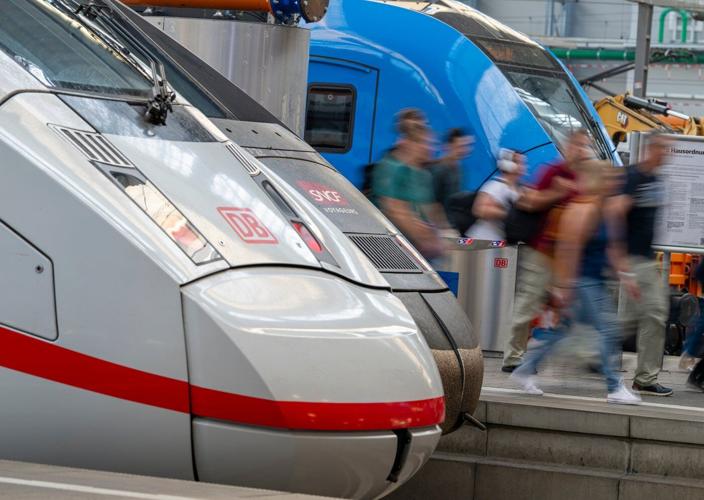
A passenger walks past an ICE train at Munich Central Station in Munich, Germany Wednesday, June 24, 2026, following the nationwide service disruption on the Deutsche Bahn network. (Peter Kneffel/dpa via AP)
Passengers walk through Munich Central Station to catch their trains this morning following the nationwide Deutsche Bahn service disruption Wednesday, June 24, 2026. (Peter Kneffel/dpa via AP)
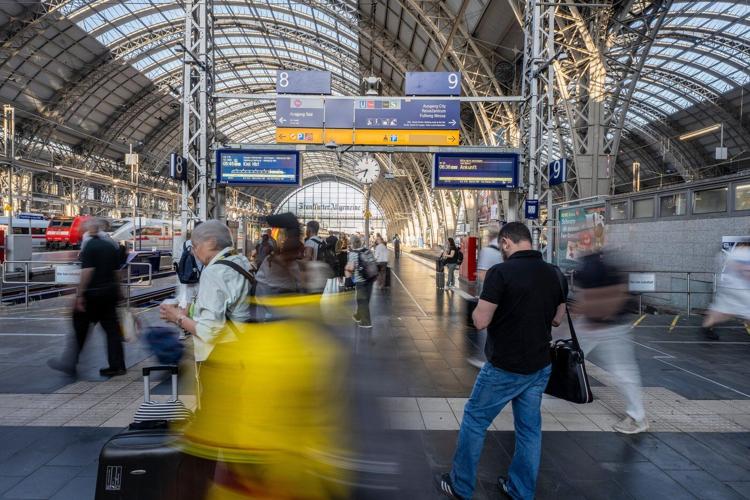
Travelers are on the move at the main train station in Frankfurt, Germany early Wednesday, June 24, 2026. (Andreas Arnold/dpa via AP)
arn
A commuter stretches out on a bench at Frankfurt's main station, Tuesday, June 23, 2026, after a communications system failure forced Germany's railway system to suspend train service. (Andreas Arnold/dpa via AP)
arn
A passenger walks past an ICE train at Munich Central Station in Munich, Germany Wednesday, June 24, 2026, following the nationwide service disruption on the Deutsche Bahn network. (Peter Kneffel/dpa via AP)
kne
Passengers walk through Munich Central Station to catch their trains this morning following the nationwide Deutsche Bahn service disruption Wednesday, June 24, 2026. (Peter Kneffel/dpa via AP)
BERLIN (AP) — Germany's railway was running largely as normal Wednesday after a late-night communication system outage left trains and travelers stranded around the country, but the main rail operator faced criticism and questions over the chaos.
Trains were halted abruptly across Germany late Tuesday because of a problem with the GSM-R digital communication system used for internal communication on the railway network. Service resumed after about two hours, during which long lines formed at information desks.
The main railway operator, federal government-owned Deutsche Bahn, said trains started running “largely seamlessly� Wednesday morning, though there may be isolated service reductions.
The cause of the failure has not been disclosed.
The breakdown came after years of increasingly frequent complaints about train delays and service interruptions.
Deutsche Bahn is conducting thorough but disruptive after years of underinvestment in a bid to improve its performance.
“That all rail traffic in Germany comes to a halt because of a technical defect is a new low in already poor operating quality,� Oliver Krischer, the regional transport minister in North Rhine-Westphalia state, Germany's most populous, told news agency dpa.
He said there need to be “emergency mechanisms that prevent such a disaster in the future. People rely on reaching their destination at least somewhat punctually by rail.�