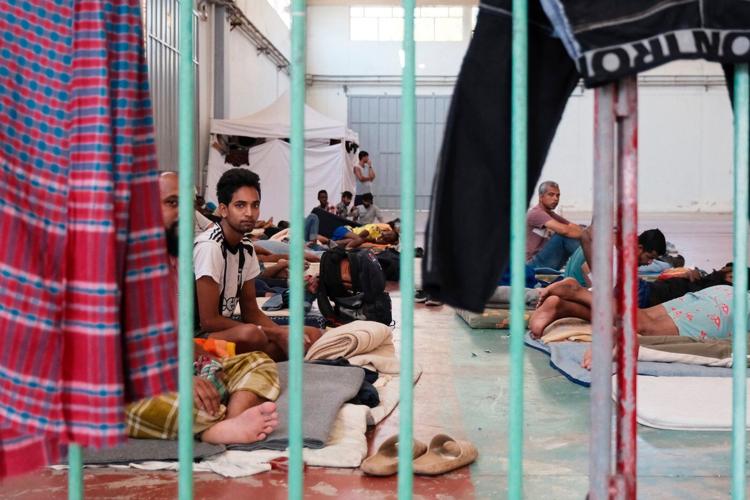
FILE - Migrants, who arrived recently at the island of Crete, are held under guard at a temporary shelter in the village of Agia, near Chania, on the island of Crete, southern Greece, Aug. 19, 2025. (AP Photo/Giannis Angelakis, File)
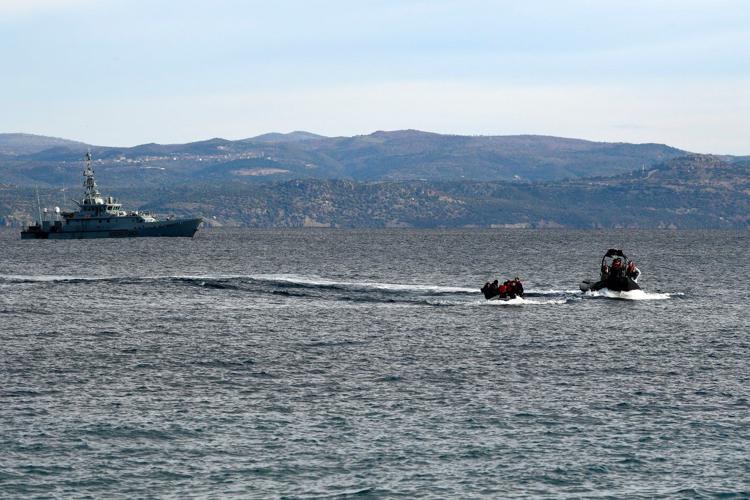
FILE - In this Friday, Feb. 28, 2020 file photo, refugees and migrants arrive in a dinghy accompanied by Frontex vessels at the village of Skala Sikaminias, on the Greek island of Lesbos, after crossing the Aegean sea from Turkey. AP Photo/Michael Varaklas, File)
FILE - Migrants, who arrived recently at the island of Crete, are held under guard at a temporary shelter in the village of Agia, near Chania, on the island of Crete, southern Greece, Aug. 19, 2025. (AP Photo/Giannis Angelakis, File)
TS
FILE - In this Friday, Feb. 28, 2020 file photo, refugees and migrants arrive in a dinghy accompanied by Frontex vessels at the village of Skala Sikaminias, on the Greek island of Lesbos, after crossing the Aegean sea from Turkey. AP Photo/Michael Varaklas, File)
BRUSSELS (AP) — The European Union on Thursday said it would drastically reduce asylum claims from seven nations in Africa, the Middle East and Asia by considering them safe countries of origin, prompting widespread outrage from human rights groups on International Migrants' Day.
An agreement between European Parliament and the European Council, or the group of the 27 EU heads of state, said that if they lack “relevant circumstances, such as indiscriminate violence in the context of an armed conflict.�
Asylum requests by people from Bangladesh, Colombia, Egypt, Kosovo, India, Morocco and Tunisia will be "fast-tracked, with applicants having to prove that this provision should not apply to them,� read the announcement of the agreement. “The list can be expanded in the future under the EU’s ordinary legislative procedure.�
In 2024, EU nations endorsed to the bloc’s failed asylum system. The rules were meant to resolve the issues that have divided the 27 countries since well over 1 million migrants swept into Europe in 2015, most fleeing war in Syria and Iraq.
Under the Pact on Migration and Asylum, which goes into force in June 2026, people can be sent to countries deemed safe, but not to those where they face the risk of physical harm or persecution.
Amnesty International EU advocate Olivia Sundberg Diez said the new measures were “a shameless attempt to sidestep international legal obligations" and would endanger migrants.
Alessandro Ciriani, an Italian MEP with the European Conservatives and Reformists group, said the designation sends a firm message that the EU has toughened its borders.
“Europe wants enforceable rules and shared responsibility. Now this commitment must become operational: effective returns, structured cooperation with third countries and real measures to support EU member states,� he said.
He said that clear delineations of safe and unsafe nations would rid the EU of “excessive interpretative uncertainty� that led to a kind of paralysis for national decision makers over border controls.
The measures also allows individual nations within the bloc to designate other countries safe for their own immigration purposes.