



WASHINGTON (AP) — The Trump administration has transformed the Environmental Protection Agency in its first year, cutting federal limits on air and water pollution and promoting fossil fuels, a metamorphosis that clashes with the agency’s historic mission to protect human health and the environment.
The administration says its actions will “unleash” the American economy, but environmentalists say the agency’s abrupt change in focus threatens to unravel years of progress on climate-friendly initiatives that could be hard or impossible to reverse.
“It just constantly wants to pat the fossil fuel business on the back and turn back the clock to a pre-Richard Nixon era” when the agency didn’t exist, said historian Douglas Brinkley.
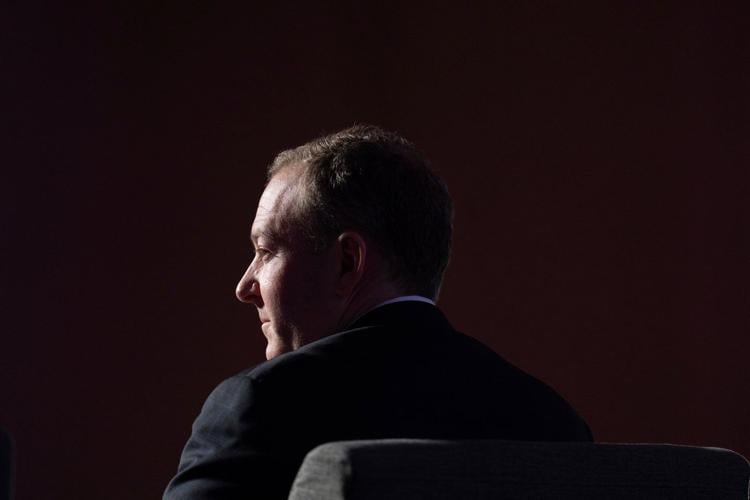
A lot has happened this year at “Trump’s EPA,” as Zeldin frequently calls the agency. Zeldin proposed overturning the is a threat to human health. He pledged to in “the greatest day of deregulation our nation has seen.” He froze billions of dollars for clean energy and .
Zeldin has argued the EPA can protect the environment and grow the economy at the same time. He announced “five pillars” to guide EPA’s work; four were economic goals, including energy dominance — Trump’s shorthand for more fossil fuels — and boosting the auto industry.
Zeldin, a former New York congressman who had a record as a moderate Republican on some environmental issues, said his views on climate change have evolved. Many federal and state climate goals are unattainable in the near future — and come at huge cost, he said.
“We should not be causing … extreme economic pain for an individual or a family” because of policies aimed at “saving the planet,” he told reporters at EPA headquarters in early December.
But scientists and experts say the EPA's new direction comes at , and would lead to far more pollutants in the environment, including mercury, lead and especially tiny airborne particles that can lodge in lungs. They also note higher emissions of greenhouse gases will worsen atmospheric warming that is driving more frequent, costly and deadly extreme weather.
Christine Todd Whitman, a Republican who led the EPA for several years under President George W. Bush, said watching Zeldin attack laws protecting air and water has been “just depressing.”
“It’s tragic for our country. I worry about my grandchildren, of which I have seven. I worry about what their future is going to be if they don’t have clean air, if they don’t have clean water to drink,” she said.
The history behind EPA
The EPA was launched under Nixon in 1970 with pollution disrupting American life, some cities suffocating in smog and some rivers turned into wastelands by industrial chemicals. Congress passed laws then that remain foundational for protecting water, air and endangered species.
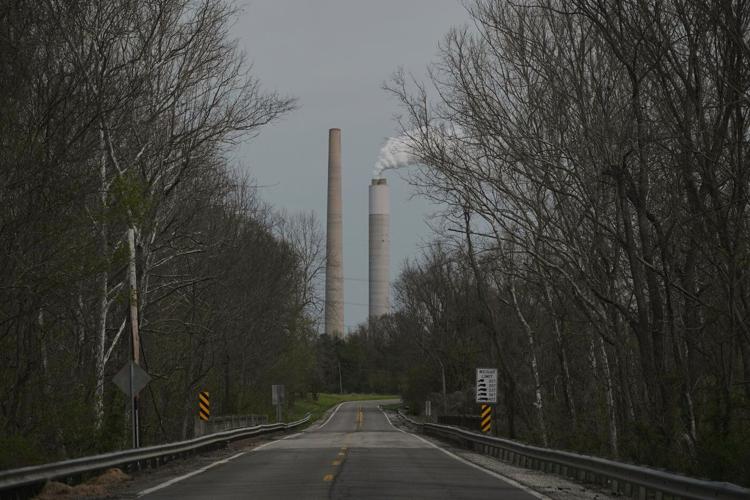
The agency's aggressiveness has always seesawed depending on who occupies the White House. Former President Joe Biden's administration boosted renewable energy and electric vehicles, tightened motor-vehicle emissions and proposed greenhouse gas limits on coal-fired power plants and oil and gas wells. Industry groups called rules overly burdensome and said the power plant rule would force many aging plants to shut down. In response, many businesses shifted resources to meet the more stringent rules that are now being undone.
“While the Biden EPA repeatedly attempted to usurp the U.S. Constitution and the rule of law to impose its ‘Green New Scam,’ the Trump EPA is laser-focused on achieving results for the American people while operating within the limits of the laws passed by Congress,” EPA spokeswoman Brigit Hirsch said.
Zeldin's list of targets is long
Zeldin has announced plans to abandon , loosen , limit and weaken . Meanwhile, he would exempt from federal emissions-reductions requirements.
Much of EPA’s new direction aligns with Project 2025, the conservative Heritage Foundation road map that argued the agency should gut staffing, cut regulations and end what it called a war on coal on other fossil fuels.
“A lot of the regulations that were put on during the Biden administration were more harmful and restrictive than in any other period. So that’s why deregulating them looks like EPA is making major changes,” said Diana Furchtgott-Roth, director of Heritage's Center for Energy, Climate, and Environment.
But Chris Frey, an EPA official under Biden, said the regulations Zeldin has targeted “offered benefits of avoided premature deaths, of avoided chronic illness … bad things that would not happen because of these rules.”
Matthew Tejada, a former EPA official under both Trump and Biden who now works at the Natural Resources Defense Council, said of the revamped EPA: “I think it would be hard for them to make it any clearer to polluters in this country that they can go on about their business and not worry about EPA getting in their way.”
Zeldin also has shrunk EPA staffing by about 20% to levels last seen in the mid-1980s.
Justin Chen, president of the EPA’s largest union, called staff cuts “devastating.” He cited the dismantling of research and development offices at labs across the country and the firing of employees who signed a letter of dissent opposing EPA cuts.
Relaxed enforcement and cutting staff
Many of Zeldin's changes aren't in effect yet. It takes time to propose new rules, get public input and finalize rollbacks.
It's much faster to cut grants and ease up on enforcement, and Trump's EPA is doing both. The number of new civil environmental actions is roughly one-fifth what it was in the first eight months of the Biden administration, according to the nonprofit Environmental Integrity Project.
“You can effectively do a lot of deregulation if you just don’t do enforcement,” said Leif Fredrickson, visiting assistant professor of history at the University of Montana.
Hirsch said the number of legal filings isn't the best way to judge enforcement because they require work outside of the EPA and can bog staff down with burdensome legal agreements. She said the EPA is “focused on efficiently resolving violations and achieving compliance as quickly as possible” and not making demands beyond what the law requires.
EPA's cuts have been especially hard on climate change programs and environmental justice, the effort to address chronic pollution that typically is worse in minority and poor communities. Both were Biden priorities. Zeldin dismissed staff and canceled billions in grants for projects that fell under the “diversity, equity and inclusion” umbrella, a Trump administration target.
He also spiked a $20 billion “green bank” set up under Biden’s landmark climate law to fund qualifying clean energy projects. Zeldin argued the fund was a scheme to funnel money to Democrat-aligned organizations with little oversight — allegations a federal judge rejected.
Pat Parenteau, an environmental law expert and former director of the Environmental Law School at Vermont Law & Graduate School, said the EPA's shift under Trump left him with little optimism for what he called “the two most awful crises in the 21st century” — biodiversity loss and climate disruption.
“I don’t see any hope for either one,” he said. “I really don’t. And I’ll be long gone, but I think the world is in just for absolute catastrophe.”
___
The Associated Press receives support from the Walton Family Foundation for coverage of water and environmental policy. The AP is solely responsible for all content. For all of AP’s environmental coverage, visit