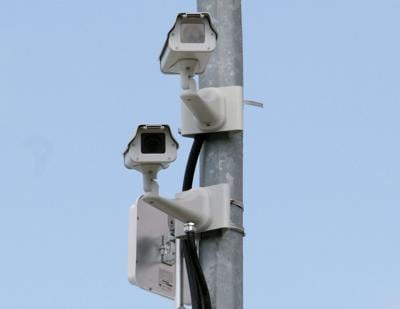
RICHMOND - The City of Richmond said it will challenge an order by British Columbia's privacy watchdog to remove high-definition surveillance cameras at an intersection on the grounds the city lacked authorization to gather private information.
It said in a statement that it had "clearly stated" to the Office of the Information and Privacy Commissioner of B.C. that its public safety camera program is "lawful" and it's now "positioned to have the legality" of its program determined by the courts.
Commissioner Michael Harvey this week ordered the city to get rid of the cameras at the intersection of Minoru Boulevard and Granville Avenue after an investigation report concluded the Freedom of Information and Protection of Privacy Act didn't grant the city legal authority to use them.
A letter, sent from Harvey to Minister of Citizens鈥� Services Diana Gibson on Tuesday, said his office had finished an investigation of the camera system, and he ordered the city to "stop the collection, delete recordings, and disable the equipment" after concluding that the city isn't authorized to collect personal information through the camera system.
"Privacy is a core democratic value, and upholding its protection is paramount to a free and healthy society,鈥� said Harvey.
But Richmond Coun. Kash Heed said in an interview Friday that the removal order showed the privacy commissioner and legislation in B.C. were "out of touch" with society and policing, with the commissioner "buried back in the traditional era."
Heed said the city would be asking for a judicial review of the take-down order.
"We, as a local government, have the ability to challenge it, and we will challenge it," said Heed.聽
The cameras were installed last February as part of a test surveillance project to collect footage of people, license plates and vehicle features that could be provided to the RCMP to help identify criminal suspects.聽
Harvey said in a news release there are situations that can justify the use of surveillance, but it must be limited and proportional.
He said advanced features of Richmond's surveillance, such as facial recognition technology, go over and above what is reasonable and raise the potential for scope creep, where technology installed for one purpose is later used for other purposes.
Heed said the cameras don't have functions of facial recognition and their uses were strictly limited to law enforcement.
Video footage was only retrievable through a court order, which ensured "tightly controlled and legally justified" access, he said.
"That footage is only available if law enforcement needs it for a serious crime, and they go to the courts to get an order to review that footage. How much more secure can we get in ensuring that we're respecting people's civil rights?" asked Heed.聽
Heed said the commissioner's arguments were "flawed since we, as a society, cannot look at these types of actions for civil liberties associations to override public safety."
"You know, not everyone's going to agree with me on this, but you're already under constant surveillance right now, and anywhere you go, anywhere you travel, any highway you go on, any mall you go into, and even in neighborhoods, in residences," said Heed.聽
For instance, like many residences in Metro Vancouver, Heed said his home is equipped with three cameras, and anyone who walks by the front or the back of his place can see their images there.聽
"And the other thing I want to point out is when there's a serious incident that happens, you hear from every police agency, the first thing, is 'if anyone has surveillance footage, dash cam video, please provide it to us,'" said Heed, a former police officer, minister of public safety and solicitor general of B.C.
Heed said public safety was paramount, and the technology could benefit other jurisdictions, such as Surrey, which has seen a rise in extortion cases targeting the South Asian community.
Heed said these cameras "are not trying to go after people's civil rights and privacy." Instead, they are trying to create a way that authorities can use it for "limited law enforcement purposes and evidentiary support for the prosecutions."
Harvey said in the letter addressed to Gibson that he also recommended that the province "regulate, through legislative amendment, technologies that capture biometric information."
"The lack of regulation partnered with the ease and availability of advanced technologies has created an untenable situation in B.C. where private organizations and public bodies are employing highly invasive tools without the necessary control and oversight," said Harvey, adding that it's "incumbent" upon the government to develop regulatory tools.聽
The city's statement says the public safety camera system will not be actively monitored in real time, and technological safeguards would be in place, with access restricted to authorized personnel.聽
This report by 好色tvwas first published Jan. 16, 2026.