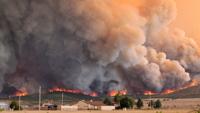
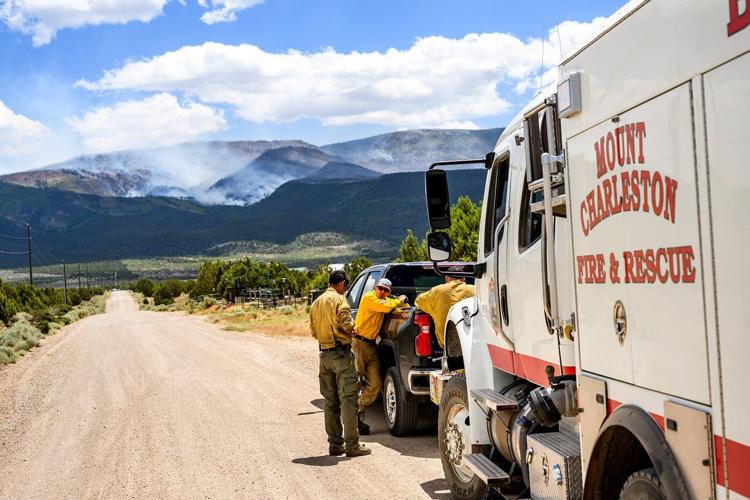

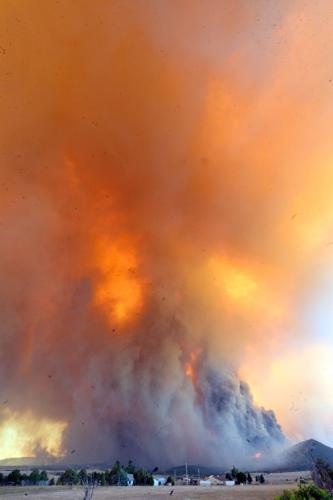
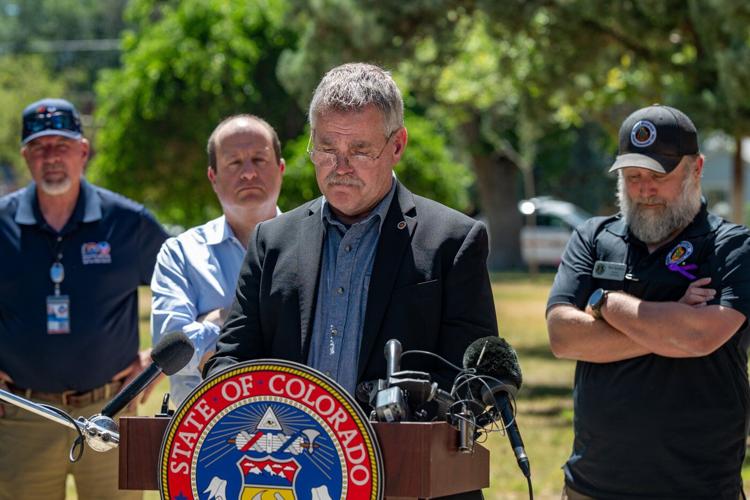

The deaths of three U.S. government firefighters in a Colorado wildfire are casting a spotlight on the Trump administration’s creation of a new federal fire service and its revival of a previously discredited policy to stomp out all wildfires quickly.
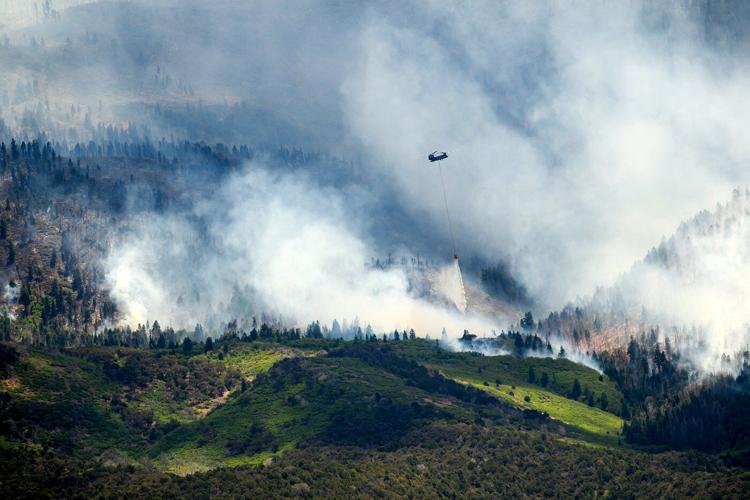
One of the killed firefighters worked for the U.S. Wildland Fire Service, created this year without customary congressional approval by drawing personnel from four agencies within the Interior Department. The victims were part of an elite, helicopter-based crew that got trapped Saturday in a near the Utah border as they attacked the blaze on the ground.
Authorities say they were among five firefighters who tried to shield themselves by deploying tentlike emergency shelters as flames overran their position. Two survivors were hospitalized with burn injuries.
The consolidation of thousands of personnel into the fire service has sown confusion among some firefighters about who their bosses are and what their responsibilities should be, according to former government officials.
And the administration’s focus on “full suppression� of new fires marks a sharp reversal from a decades-long trend toward embracing flames as a tool — to burn off old vegetation and growth that acts like fuel and lessen the risk of catastrophic blazes being stoked by a warming planet.
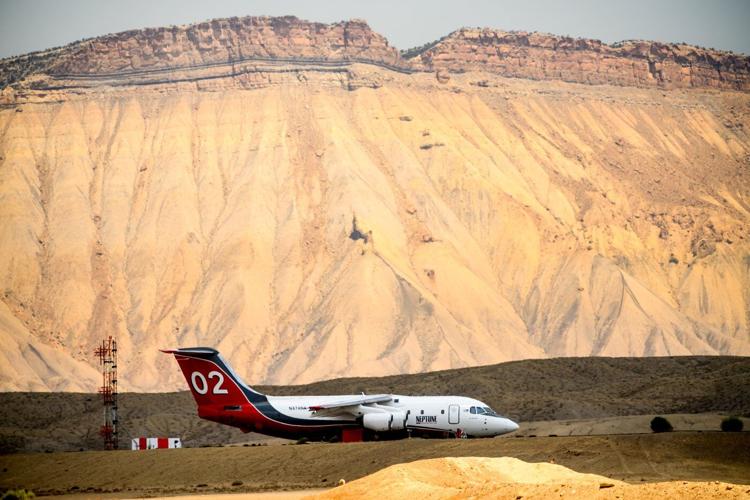
The changes benefit private fire aviation companies that are key to hitting blazes fast.
Federal officials have not released details on the circumstances preceding the weekend deaths, including the firefighters’ objective at the site where they were overrun.
“The question is, why were they attacking that fire in the first place?� asked Timothy Ingalsbee, a former federal firefighter and cofounder of the advocacy group Firefighters United For Safety, Ethics and Ecology. “What was actually at risk? If it was a bunch of shrubs on remote mountaintops, what was the real risk that justified putting those firefighters at risk?�
98% of fires are extinguished
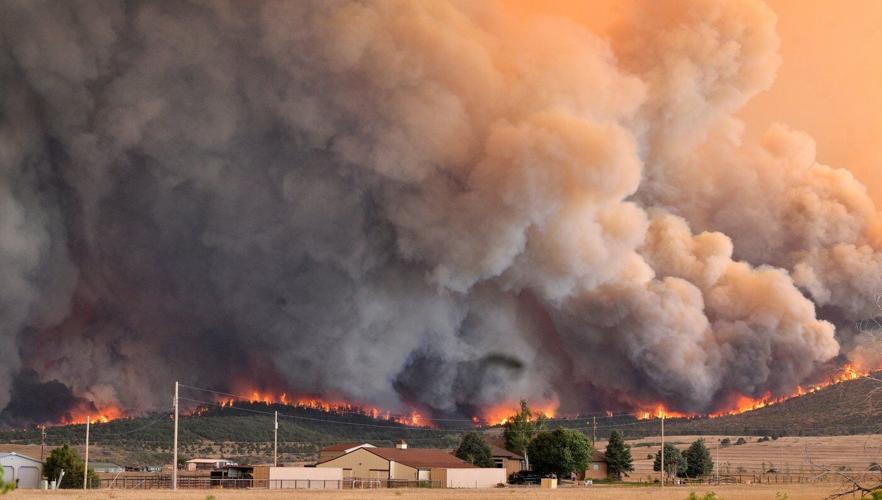
Wildfires ignited over the past week all across the West following months of dry weather and a in some places.
Acting under an order from Interior Secretary Doug Burgum, the Wildland Fire Service will use full suppression “for every wildfire under its management,� federal officials said in a statement to The Associated Press.
“Any wildfire that represents a threat to life, property, infrastructure or the environment should be extinguished as quickly as possible,� the statement said. “Our experienced fire managers retain the authority to select the safest and most effective tactics based on conditions on the ground.�
But critics say the administration is trying to fix something that isn’t broken: The four agencies the firefighters were drawn from — the Bureau of Land Management, Fish and Wildlife Service, Bureau of Indian Affairs and ºÃÉ«tv Park Service — have a record of extinguishing 98% of the fires they handle.
The new agency and policy won’t eliminate catastrophic wildfires that occur due to dense forests where people are increasingly moving and extreme weather caused by climate change, said Steve Ellis, who retired as a Bureau of Land Management deputy director. Land managers must be a part of the solution, he said.
“Severing forest management and forest managers from fire suppression will make firefighting less safe and put communities at greater risk,� Ellis said.
The two other wildland firefighters killed in Colorado worked for the Department of Agriculture’s Forest Service, which handles most U.S. wildfires and is also operating under a full suppression policy. Trump had wanted the new agency to include Forest Service firefighters, but Congress blocked that part of the plan.
Fire aviation companies pushed for the consolidation
Under Trump, federal officials have been bringing in aircraft more quickly once fires ignite, said Austin Moeller, senior aerospace analyst for Canaccord Genuity group, an investment firm.
“Anyone that has an air tanker benefits from this more aggressive contracting activity,� Moeller said.
A chief beneficiary is Bridger Aerospace, a Montana-based company founded by U.S. Sen. Tim Sheehy. Before his 2024 election, Sheehy hired lobbyists in a failed attempt to persuade the Montana Legislature to create a statewide fire service analogous to the one just created at the federal level. Within a month of taking federal office, he sponsored a bill to codify the consolidation of federal firefighters into one agency.
Sheehy stepped away from his company during the 2024 campaign and put his Bridger assets into a blind trust, said Sheehy spokesman Tate Mitchell.
Mitchell said Trump was behind the idea to create a new fire agency, but Sheehy supports it.
“One of Senator Sheehy’s top priorities in the Senate is using his experience to stop the catastrophic fires destroying American communities and he won’t apologize for it,� Mitchell said.
Bridger describes itself as one of the nation's leading aerial firefighting companies. CEO Sam Davis has said the company's fleet of Super Scooper aircraft, its surveillance aircraft and its fire observation technology make it “uniquely positioned� to respond to the renewed emphasis on attacking fires to put them out.
New full suppression policy dates back decades
The aircraft will help the administration's new full suppression policy, which harkens back to a 1935 policy known as the 10 a.m. rule because it required agencies to put out new fires by 10 a.m. the following day.
Michael Dudley, a retired director of fire, aviation and air management at the Forest Service, said that old policy is why forests today are overgrown.
Wildfires serve a purpose — they clear out the small and dead material. But officials became so good at putting out fires that the forests kept growing and more fuels built up, so when a fire hits now, it's easy for it to get out of control, he said.
Scientists who study wildfires say trying to stop all fires is unrealistic since some of the most destructive blazes in recent years have evaded efforts to put them out. Some fires simply grow too fast, are too remote, or result from multiple ignitions that makes them impossible to stop.
“The narrative that if we just try harder, we’re gonna make these fires go away isn’t true,� said former Forest Service wildfire researcher David Calkin. “The fire paradox is not beatable: The more you make fire go away, the more fuel accumulates. The more fuel accumulates, the harder it is to make fires go away.�
Firefighters: New agency needs work
Firefighters in the consolidated agency are working under newly appointed Wildland Fire Service Chief Brian Fennessy, who had served as chief of California's Orange County Fire Authority since 2018.
“There’s a level of confusion as everyone’s trying to sort out responsibilities and who’s in charge and who do you report to,� Dudley said.
An Interior spokesperson said Fennessy was highly respected with decades of experience, including managing some of the nation's most complex fire challenges in densely-populated southern California.
Luke Mayfield, a founder of the group Grassroots Wildland Firefighters, said he believes the consolidation will better serve firefighters, but significant work remains to get the new agency fully running.
“Everyone was aware of the potential fuel and fire conditions we face this fire season,� Mayfield said. “Those conditions are surfacing and have resulted in firefighter fatalities with weather conditions that won’t let up in the near future.�