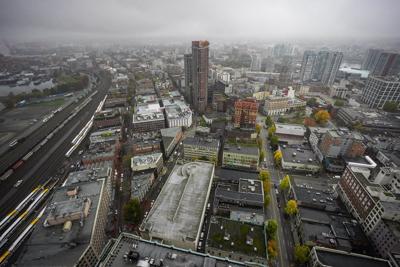
VANCOUVER - Downtown Eastside resident Brian O'Donnell lives in a single-room occupancy hotel in Chinatown, although he says it's not really a home.
"It's livable," said O'Donnell, who added that he felt like a "house mother" to fellow tenants. "It's got a roof over my head."聽
O'Donnell was one of hundreds of voices heard at Vancouver City Council as it debated a policy change to alter zoning rules to increase density.聽
He said his biggest worry about the plan is gentrification and displacement of entrenched members of the community in favour of moneyed interests looking to cash-in on redevelopment opportunities.聽
The City of Vancouver calls the plan, approved on Tuesday night, a "significant shift" in housing policy for the Downtown Eastside to speed up the replacement of rooming houses in the impoverished neighbourhood.
It includes changing "inclusionary housing requirements," reducing the percentage of social housing rental units from 60 per cent down to 20 per cent for "turnkey" housing delivered to the city in the Downtown Eastside Oppenheimer District.聽
It also changes the definition of "social housing" in the neighbourhood and reduces the proportion of units in a building required to be rented out at income assistance shelter rates, from 33 per cent to 20 per cent.
It's those reductions and other aspects of the plan that have O'Donnell and community advocates angry with Mayor Ken Sim and others in his party who approved the changes despite community opposition.聽
"It's still not enough and they want to reduce it," O'Donnell said in an interview in an alley not far from his hotel.聽
The new amendments also will allow for towers up to 32 storeys to replace single-room occupancy buildings.聽
O'Donnell said such a significant change would not be tolerated in other parts of Vancouver.聽
"Why don't you go to Kitsilano or Shaughnessy and let's tear down all those old Victorian houses with asbestos in them and build towers there," he said. "They'd laugh at you."聽
The report to council recommending the changes said the revisions would align the city's affordability requirements with senior government funding programs, which could "decrease" affordability for some projects but increase development.聽
"While senior government investment has resulted in the steady delivery of social and supportive housing in the (Downtown Eastside) and across the city, we continue to rely on aging (single-room occupancy buildings) as a last resort before homelessness for many of the city鈥檚 poorest and most equity-denied residents," the report said.
"Despite the urgent need, it has never been more expensive to construct new affordable housing."聽
Sim said in a statement that single-room occupancy buildings are deteriorating and "regulatory barriers" have stopped replacement projects from going ahead.聽
The city said the changes adopted by council "modernize outdated rules" that have hampered efforts to fix "deteriorating housing conditions in one of Vancouver鈥檚 most complex neighbourhoods."聽
Councillor Sean Orr said in council Tuesday that the "scale of this plan is out of whack with what the neighbourhood has said they want."聽
"I appreciate that this is the only way to build housing in this current, economic situation," he said. "This is a motion to increase social housing but we made it harder to build social housing across the city."聽
Nat Canuel works at a supportive housing building at 162 Main St., which took in many residents displaced when the city shut down a modular supportive housing building known as Larwill Place on Cambie Street last year.聽
Where that building used to stand is now a parking lot. It was supposed to become the new Vancouver Art Gallery before the project was shelved due to ballooning construction costs.聽
Canuel said he'd love to see meaningful investment in the neighbourhood, but he worries that Sim and his ABC Party "don't have that interest at heart."
"The Downtown Eastside is sort of the last undeveloped area of downtown. This is the only way that you can really go," he said. "And you can just see, or you can smell the hunger on the developers' faces that are just chomping at the bit to get in there and like raze everything basically.
"They've been chipping away at it for so long."聽
Canuel said he hopes the changes are nullified after the next municipal election in October 2026 if Sim and his party get voted out.聽
"Because it's not the right way to do things," he said. "I don't believe at all that they're going to improve the situation for the residents that already live here."聽
This report by 好色tvwas first published Dec. 17, 2025.