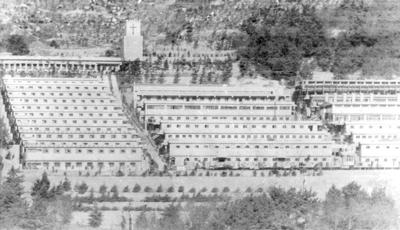
FILE - This undated file photo shows the Brothers Home compound in Busan, South Korea. In a landmark report in August 2022, the country's Truth and Reconciliation Commission found Seoul’s past military governments responsible for atrocities committed at Brothers Home, a state-funded “vagrants’ facility� where thousands were enslaved and abused from the 1960s to 1980s. (Yonhap via AP, File)
FILE - This undated file photo shows the Brothers Home compound in Busan, South Korea. In a landmark report in August 2022, the country's Truth and Reconciliation Commission found Seoul’s past military governments responsible for atrocities committed at Brothers Home, a state-funded “vagrants’ facility� where thousands were enslaved and abused from the 1960s to 1980s. (Yonhap via AP, File)
SEOUL, South Korea (AP) — South Korea’s presidential office said Monday it approved a request by the country’s Truth and Reconciliation Commission for a one-year extension after investigators sought more time to examine human rights violations linked to past military governments, including the widespread falsifying of child origins that fueled a foreign adoption boom in the 1970s and '80s.
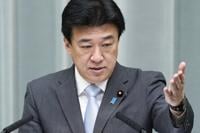
In granting the request for an extension through May 2025, South Korean President Yoon Suk Yeol acknowledged the need to “restore the honor of those who were unjustly victimized during our past history and those who sacrificed for the sake of the country,� said Hwang Sang Moo, senior secretary for civil and social affairs.
Commission chair Kim Kwang-dong is expected to announce the extension after a meeting of commissioners on Tuesday. While Kim had the nominal authority to extend the mandate by up to a year, the decision depended on the consent of the government, which would have to approve its budget.
Kim last month said a one-year extension beyond May 26 of this year was crucial because investigators are struggling to handle the thousands of cases.
Kim highlighted the who suspect their biological origins were manipulated to facilitate their adoptions. Some have asked the commission to look into abuse they say they experienced at South Korean orphanages or under the care of their foreign adopters.
The commission has completed investigations into about half of the 20,000 cases it accepted, which include cases involving Japan's violent suppression of Korean independence activists during its 1910-45 rule of the Korean Peninsula and civilian massacres before and after the 1950-53 Korean War.
creating what’s believed to be the world’s largest diaspora of adoptees.
Most were placed with white parents in the U.S. and Europe during the 1970s and ’80s. South Korea’s then-military governments were focused on economic growth and saw adoptions as a tool to reduce the number of mouths to feed, erase the “social problem� of unwed mothers and deepen ties with the democratic West.
Most adoptees were registered by agencies as abandoned orphans found on the streets, although they frequently had relatives who could be easily identified. That practice often made their roots difficult or impossible to trace. South Korea’s government has never acknowledged direct responsibility for the problems surrounding past adoptions, which have drawn growing international awareness. Denmark’s only overseas adoption agency said this month it is “winding down� its facilitation of international adoptions from several countries, and Sweden's only adoption agency last year said from South Korea.
South Korea's commission has been interviewing adoptees who have applied for investigation and examining government records and paperwork produced by South Korean adoption agencies.
While the commission has yet to announce any findings, including falsely describing them as orphans or faking their identities.
Modeled after the South African commission established in the 1990s to expose apartheid-era injustices, South Korea launched its Truth and Reconciliation Commission in 2006 to investigate past human rights violations, including civilian massacres during the 1950-53 Korean War, in an effort that continued until 2010.
Following the passing of the commission was re-launched in December 2020 under South Korea’s former liberal government, with a focus on cases that occurred during the country’s military dictatorships from the 1960s to 1980s.
, the commission found Seoul’s past military governments responsible for atrocities committed , a state-funded “vagrants’ facility� where thousands were enslaved and abused until the late 1980s.
The hundreds of deaths, rapes and beatings at Brothers were documented by an in 2016 based on hundreds of exclusive documents and dozens of interviews with officials and former detainees. It showed that the abuse was much more vicious and widespread than previously known. In a follow-up report in 2019, the AP found that The adoptees investigated by the commission include