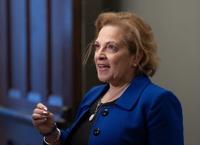
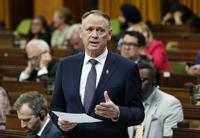
Ghana's Foreign Minister, Samuel Okudzeto Ablakwa, addresses delegates at the opening of the Slavery Reparations Conference in Accra, Ghana, Wednesday, June 17, 2026. (AP Photo/Reuben Ekow Quansah)
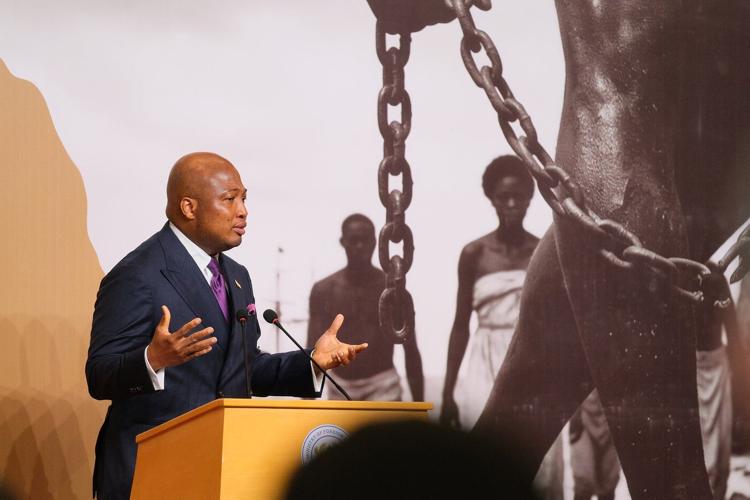
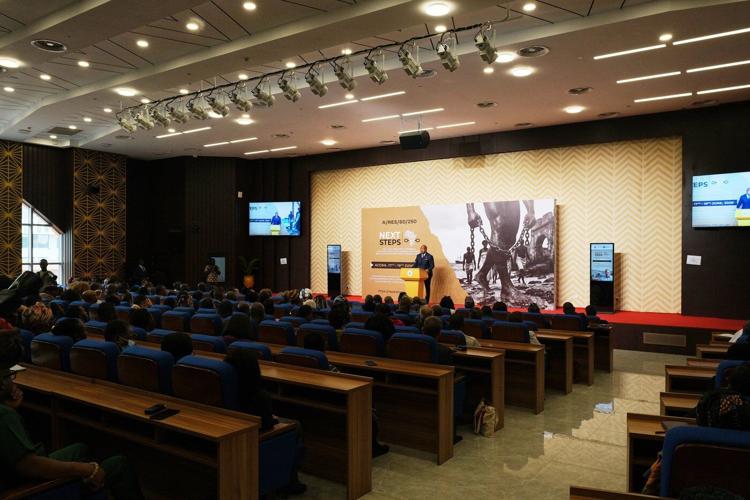
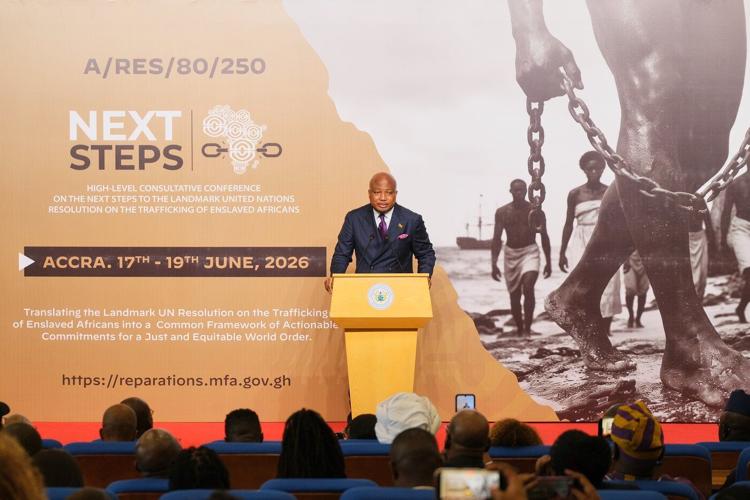
Ghana's Foreign Minister, Samuel Okudzeto Ablakwa, addresses delegates at the opening of the Slavery Reparations Conference in Accra, Ghana, Wednesday, June 17, 2026. (AP Photo/Reuben Ekow Quansah)
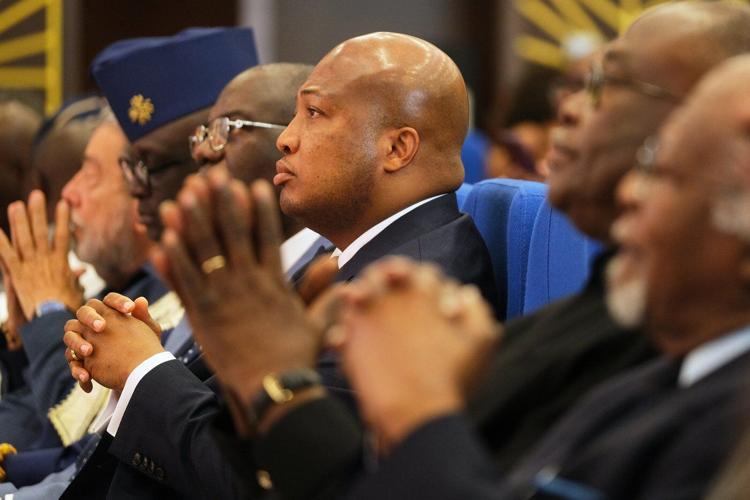
Ghana's Foreign Minister, Samuel Okudzeto Ablakwa, attends the opening of the Slavery Reparations Conference in Accra, Ghana, Wednesday, June 17, 2026. (AP Photo/Reuben Ekow Quansah)
Ghana's Foreign Minister, Samuel Okudzeto Ablakwa, addresses delegates at the opening of the Slavery Reparations Conference in Accra, Ghana, Wednesday, June 17, 2026. (AP Photo/Reuben Ekow Quansah)
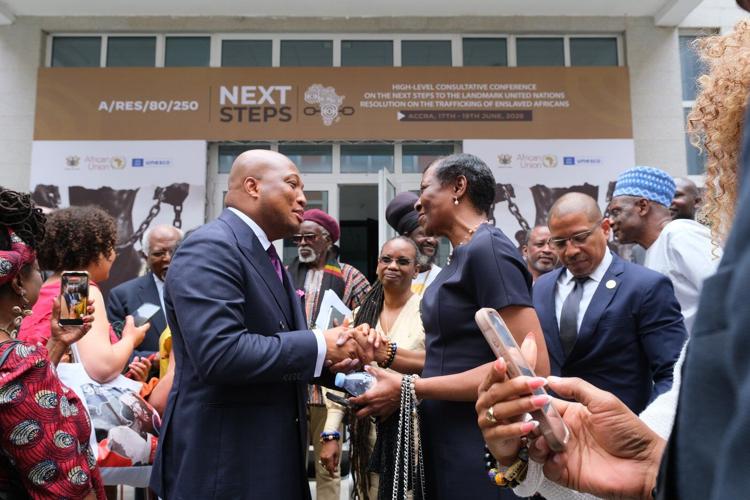
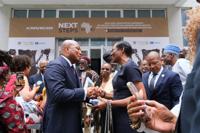
Ghana's Foreign Minister, Samuel Okudzeto Ablakwa, speaks with a delegate at the opening of the Slavery Reparations Conference in Accra, Ghana, Wednesday, June 17, 2026. (AP Photo/Reuben Ekow Quansah)
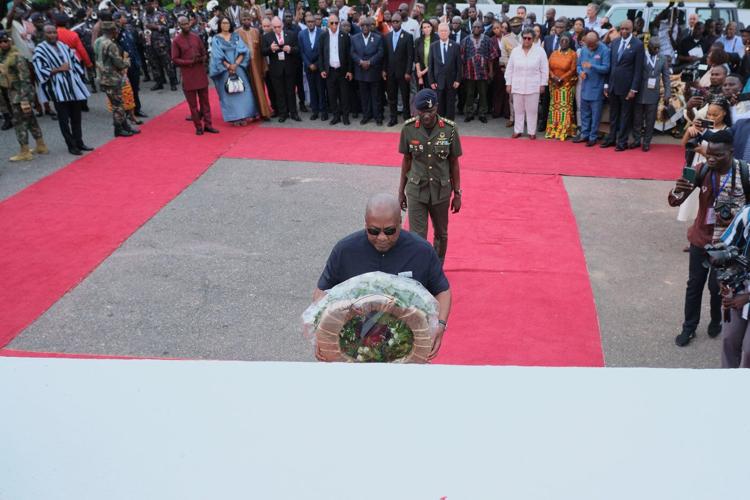
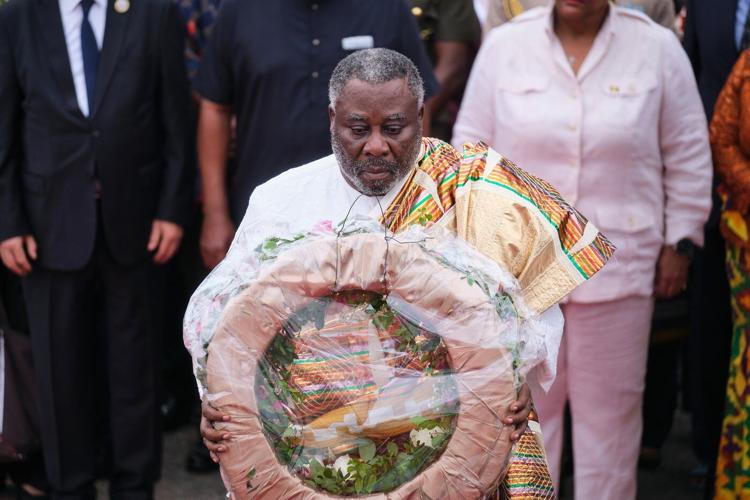
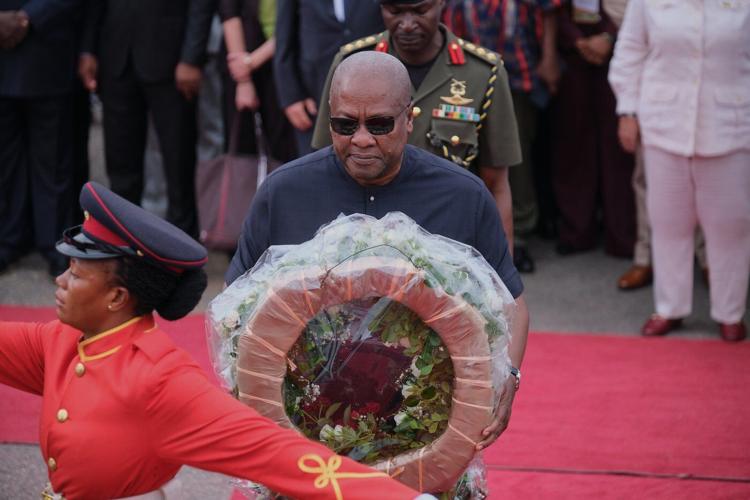
President John Dramani Mahama lays a wreath in a ceremony to honor victims of the transatlantic slave trade at Christiansborg Castle during a Juneteenth commemoration ceremony in Accra, Ghana, Friday, June 19, 2026. (AP Photo/Reuben Ekow Quansah)
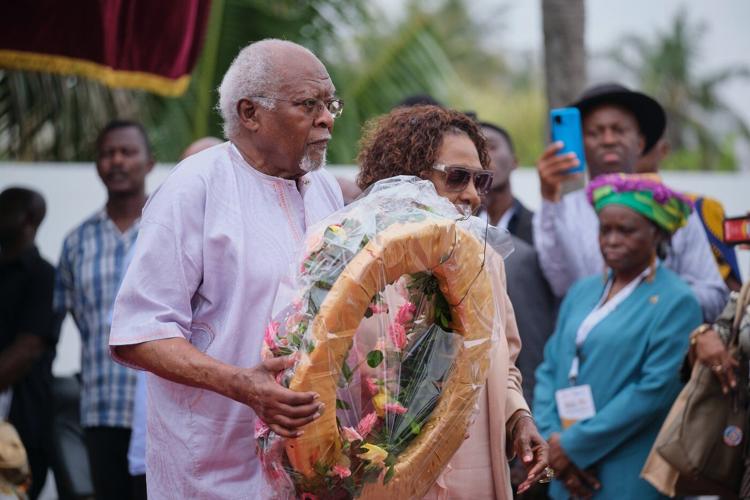
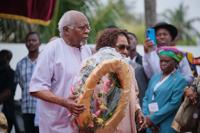
Dr. Julius Garvey, son of Black nationalist Marcus Garvey, lays a wreath in a ceremony to honor victims of the transatlantic slave trade at Christiansborg Castle during a Juneteenth commemoration ceremony in Accra, Ghana, Friday, June 19, 2026. (AP Photo/Reuben Ekow Quansah)
Ogyeahoho Yaw Gyebi II, Paramount Chief of the Sefwi Anhwiaso Traditional Area and President of the ºÃÉ«tv House of Chiefs, lays a wreath in a ceremony to honor victims of the transatlantic slave trade at Christiansborg Castle during a Juneteenth commemoration ceremony in Accra, Ghana, Friday, June 19, 2026. (AP Photo/Reuben Ekow Quansah)
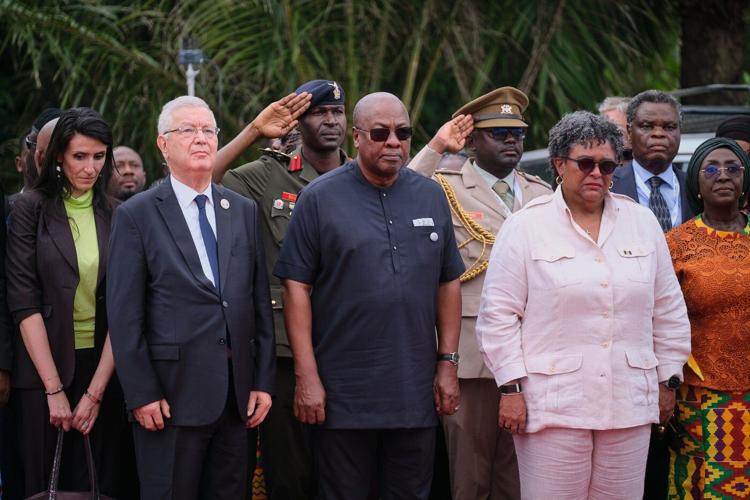
President John Dramani Mahama, center, Barbados Prime Minister Mia Amor Mottley, right, and other dignitaries attend a wreath-laying ceremony to honor victims of the transatlantic slave trade at Christiansborg Castle during a Juneteenth commemoration ceremony in Accra, Ghana, Friday, June 19, 2026. (AP Photo/Reuben Ekow Quansah)
President John Dramani Mahama lays a wreath in a ceremony to honor victims of the transatlantic slave trade at Christiansborg Castle during a Juneteenth commemoration ceremony in Accra, Ghana, Friday, June 19, 2026. (AP Photo/Reuben Ekow Quansah)
Ghana's Foreign Minister, Samuel Okudzeto Ablakwa, addresses delegates at the opening of the Slavery Reparations Conference in Accra, Ghana, Wednesday, June 17, 2026. (AP Photo/Reuben Ekow Quansah)
Reuben Ekow Quansah
Ghana's Foreign Minister, Samuel Okudzeto Ablakwa, addresses delegates at the opening of the Slavery Reparations Conference in Accra, Ghana, Wednesday, June 17, 2026. (AP Photo/Reuben Ekow Quansah)
Reuben Ekow Quansah
Ghana's Foreign Minister, Samuel Okudzeto Ablakwa, attends the opening of the Slavery Reparations Conference in Accra, Ghana, Wednesday, June 17, 2026. (AP Photo/Reuben Ekow Quansah)
Reuben Ekow Quansah
Ghana's Foreign Minister, Samuel Okudzeto Ablakwa, addresses delegates at the opening of the Slavery Reparations Conference in Accra, Ghana, Wednesday, June 17, 2026. (AP Photo/Reuben Ekow Quansah)
Reuben Ekow Quansah
Ghana's Foreign Minister, Samuel Okudzeto Ablakwa, speaks with a delegate at the opening of the Slavery Reparations Conference in Accra, Ghana, Wednesday, June 17, 2026. (AP Photo/Reuben Ekow Quansah)
Reuben Ekow Quansah
President John Dramani Mahama lays a wreath in a ceremony to honor victims of the transatlantic slave trade at Christiansborg Castle during a Juneteenth commemoration ceremony in Accra, Ghana, Friday, June 19, 2026. (AP Photo/Reuben Ekow Quansah)
SA
Dr. Julius Garvey, son of Black nationalist Marcus Garvey, lays a wreath in a ceremony to honor victims of the transatlantic slave trade at Christiansborg Castle during a Juneteenth commemoration ceremony in Accra, Ghana, Friday, June 19, 2026. (AP Photo/Reuben Ekow Quansah)
SA
Ogyeahoho Yaw Gyebi II, Paramount Chief of the Sefwi Anhwiaso Traditional Area and President of the ºÃÉ«tv House of Chiefs, lays a wreath in a ceremony to honor victims of the transatlantic slave trade at Christiansborg Castle during a Juneteenth commemoration ceremony in Accra, Ghana, Friday, June 19, 2026. (AP Photo/Reuben Ekow Quansah)
SA
President John Dramani Mahama, center, Barbados Prime Minister Mia Amor Mottley, right, and other dignitaries attend a wreath-laying ceremony to honor victims of the transatlantic slave trade at Christiansborg Castle during a Juneteenth commemoration ceremony in Accra, Ghana, Friday, June 19, 2026. (AP Photo/Reuben Ekow Quansah)
SA
President John Dramani Mahama lays a wreath in a ceremony to honor victims of the transatlantic slave trade at Christiansborg Castle during a Juneteenth commemoration ceremony in Accra, Ghana, Friday, June 19, 2026. (AP Photo/Reuben Ekow Quansah)
ACCRA, Ghana (AP) — African and Caribbean leaders in Ghana on Friday urged former slave-trading nations to issue apologies and reparations over the trafficking of enslaved Africans after a landmark U.N. resolution in March declaring it “the gravest crime against humanity.�
The “Next Steps� conference in the Ghanaian capital of Accra issued a declaration calling on countries involved in the Atlantic slave trade to “offer full, formal and unconditional apologies as a foundational step towards reconciliation, trust-building and reparatory justice.�
The U.N. resolution is non-binding but carries moral authority. Organizers said the Ghana conference was aimed at moving the reparations debate from recognition to concrete measures, including moves to require compensation under international law.
About 12 million were forcefully taken by traders from European nations from the 16th to the 19th century and enslaved on plantations that built wealth at the price of misery.
Ghana President John Dramani Mahama said the U.N. resolution had created a new opportunity for meaningful engagement on reparations. He said the effects of slavery continue to be felt across Africa, the Caribbean, and the wider African diaspora.
“We’re here because recognition creates responsibility, and because the enduring consequences of this history continue to demand thoughtful, coordinated, and sustained international engagement,� Mahama told delegates from more than 80 countries.
, participants proposed establishing a Global Reparation Fund, though they did not clarify how it would operate.
Positions on reparations are mixed in countries that would contribute.
For example, residents of the United States view the prospect of reparations mostly negatively. A Pew Research Center survey conducted in 2021 found that only about three in 10 U.S. adults said descendants of people enslaved in the U.S. should be repaid in some way, such as being given land or money.
Some activists say reparations should include direct financial payments, but also developmental aid for countries and the s.