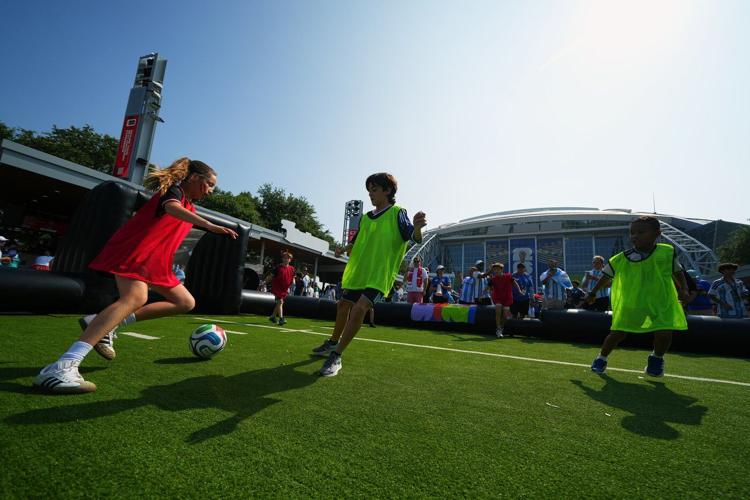

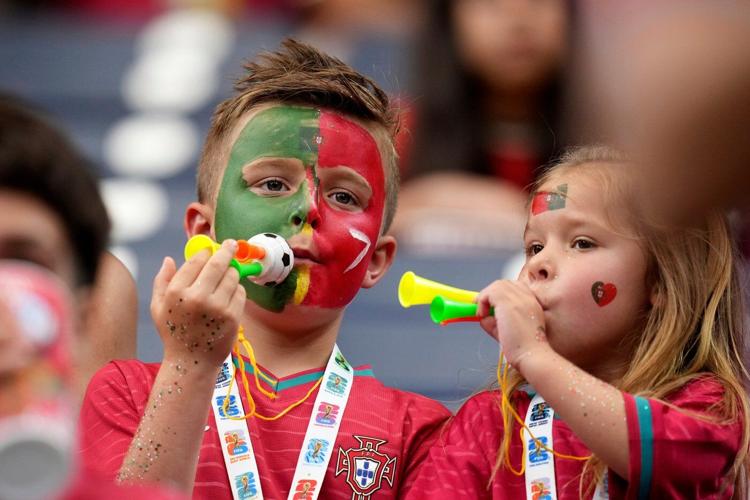

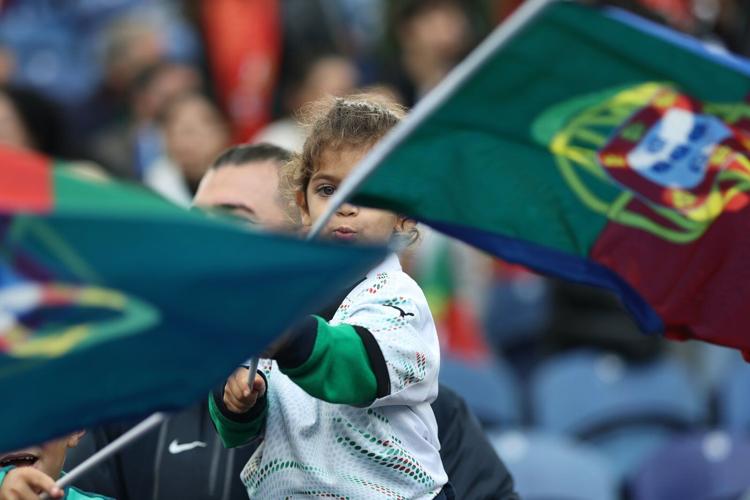

FLAGSTAFF, Ariz. (AP) — Like the Winter Olympics, Masters Tournament and Formula 1 races before it, the World Cup is inspiring some young people to try a new sport and others to imagine themselves on an international stage someday. Researchers even have a name for the motivating influence of major sporting events: the “demonstration effect.�
For many parents, though, such excitement can present daily challenges and weighty decisions. How much time should families put into a sport a child could outgrow after one season? How can parents tell whether an interest will last? And how can they distinguish between encouragement and too much pressure?
Here’s what parents and academic experts say about supporting children in healthy ways and giving them some agency over their participation.
Give children the lead in their sports experience
When children discover a new sport, adults are tempted to , lessons and competition early on. But experts say a slower approach gives families time to determine if a newfound interest is likely to stick, especially since children often cycle through hobbies as they grow.
Instead of committing to full seasons or ongoing lessons right away, consider more affordable, less time-intensive ways for children to , such as playing with friends or attending camps or clinics.
Learning about nearby coaches, and leagues from other families can help parents make the best decisions for their children, said Travis Dorsch, the founding director of the Families in Sport Lab at Utah State University. Just as important, he said, is learning about the sport and finding ways to participate that allow the child to lead.
“If it is soccer, parents should go down to the park, take a ball and kick it around with their kids, show them that you care about what they care about,� Dorsch said.
One of the biggest challenges for some parents is resisting the urge to relive their own athletic ambitions through their children, says JJ Rauchwarger, 39, a youth baseball and basketball coach in Oregon who played collegiate basketball in Arizona. They may measure their children’s performance against their own unmet goals, raising expectations or adopting a coaching mindset that can shape how children see themselves, she said.
A way to keep hopes in check is by emphasizing the importance of staying active and healthy, she said.
“I already had my career. It was 20 years ago. What matters is my little one scored his first basketball this year in little tiny top basketball, and he was stoked beyond measure," Rauchwarger said. "My oldest one figured out how to one-up a layup and hit the free throw. That is way cooler than anything I ever did.�
Rauchwarger suggests parents treat sports as a fun activity that helps younger children become more , whether or not it puts them on a path to becoming the next , LeBron James, or Shohei Ohtani.
“When we specialize early, we, as parents and coaches, put too much pressure on it," she said. "I’m all for accountability and expectations. But that means are you being a good teammate? Are you putting forth your best effort? Are you showing up with a positive attitude?�
Some parents worry their children will miss out on important opportunities if their athletic development is not fostered from an early age, Dorsch said. Between potential scholarships, name, image and likeness payments, and professional contracts worth millions of dollars, it can be easy to forget that fun is supposed to be part of the experience, he said.
“Most parents want what’s best for their kids and are just trying to operate as best as they can within the system,� he said.
Know when they're ready for the next level
Nick Asinjo, 14, is a defender for Cincinnati United Premiere, a travel soccer club that plays year-round, requires tryouts and has an emphasis on achievement. Nick, who lives in Dayton, Ohio, said he decided in sixth grade that he wanted to focus on soccer after coaches, teammates and family members encouraged him and he saw his own potential in the sport.
“I want to get better. I see the pros, I see how they live and how they play, and it motivates me to go out there and be better,� he said.
While parents provide transportation, pay fees and organize schedules, children should ultimately determine how much time and energy they want to devote to a sport, according to experts. Healthy motivation comes from creating an environment where young athletes feel a sense of autonomy, competence and connection with their teammates, according to Dorsch.
Nick’s mother, Tess Mitchner Asinjo, 51, said it became clear her two children were serious about sports after years of participation. When they began asking for extra training and looking for ways to improve, she said it signaled they were ready for a deeper commitment.
Tamara McLeod, chair of the Department of Athletic Training at A.T. Still University in Mesa, Arizona, said that kind of inner drive is an important sign. in a single sport and compete year-round on a traveling team can be expensive and time-consuming. Over time, the demands can be stressful for athletes and their families.
Some children and teenagers thrive under those conditions, especially when their desire to excel is self-driven, McLeod said. But as families invest more time and money, some may feel compelled to continue pursuing increasingly competitive opportunities, even when if a child’s interest begins to wane.
External pressure in the absence of sincere engagement also can put too heavy a physical and emotional load on some children. Early symptoms of injuries from repetitive movements are often easy to overlook but can worsen to the point of requiring lengthy recovery periods or surgery.
Emphasize growth over elite outcomes
Regardless of how much talent children exhibit early on, experts recommend helping them keep sports in perspective. Most teenagers will not have careers or livelihoods based on their respective sports, so emphasizing personal growth and enjoyment over elite outcomes is most often both constructive and realistic, experts say.
Of the nearly 8 million students participating in high school sports, only about 560,000 will go on to compete for universities and colleges that are members of the NCAA, according to data from the governing body for college athletics and the ºÃÉ«tv Federation of State High School Associations. Among those, at the professional or Olympic level.
The U.S. Olympic & Paralympic Committee’s American Development Model encourages parents and coaches to over early competitive success. The framework used by many national sport governing bodies recommends that children sample multiple sports, particularly before age 12, emphasizes skill development and enjoyment over winning, and encourages adults to monitor training loads and allow for adequate rest and recovery.
“We want our kids to be healthy. We want them to learn to respect authority figures. We want to learn how to win and lose with grace. We want them to become resilient and have grit,� Dorsch said. “But it’s incumbent upon the coaches and parents to actually deliver on that promise and not just assume that sport is going to do it automatically.�
___
See more of here.