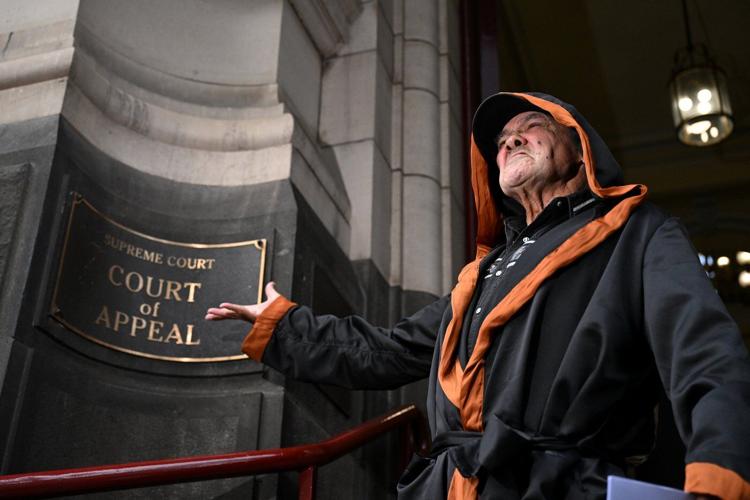
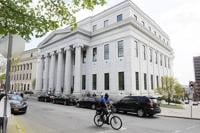
Uncle Robbie Thorpe speaks outside the Victoria state Supreme Court of Appeal in Melbourne, Australia, Wednesday, June 3, 2026. (James Ross/AAP Image via AP)
Uncle Robbie Thorpe speaks outside the Victoria state Supreme Court of Appeal in Melbourne, Australia, Wednesday, June 3, 2026. (James Ross/AAP Image via AP)
JR SS RR
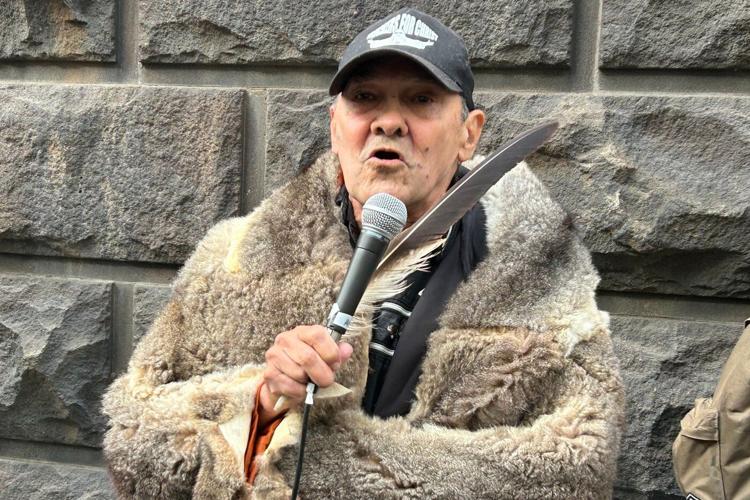
Uncle Robbie Thorpe speaks outside the Victoria state Supreme Court of Appeal in Melbourne, Australia, Wednesday, June 3, 2026. (AP Photo/Rod McGuirk)
MELBOURNE, Australia (AP) — Three Australian appeals court judges reserved their decision Wednesday on whether an activist can prosecute Britain’s King Charles III for alleged genocide of Australia’s Indigenous people.
Uncle Robbie Thorpe, 68, turned to the Supreme Court of Appeal in Victoria state after two lower courts rejected his bid to launch a private prosecution against the king in the Melbourne Magistrates’ Court. Indigenous Australians use the titles uncle and aunt as marks of respect for community elders.
His case alleges the monarch, who is also Australia’s head of state, the Australian government and its institutions were perpetuating a genocide of Indigenous people by maintaining systemic disadvantages on multiple socioeconomic levels, making them the most underprivileged minority in the country.
Indigenous Australians account for 4% of the population. They than other Australians, suffer worse health problems, and are more likely to be imprisoned and unemployed than other groups, according to official statistics.
Thorpe told The Associated Press if he exhausts his legal options in Australia, he would take the offense under the Genocide Convention to the in the Netherlands.
“It’s clear that they’re unwilling, unable, reluctant to deal with these international legal issues like genocide,” Thorpe told the AP before the hearing, referring to the Australian judiciary.
He later told the judges Indigenous people were dying because their in Australia was compounding.
“The Crown is responsible for all this mess,” Thorpe said. “Australia’s got away with genocide of Aboriginal people since they arrived here."
The British colonized Australia in 1788 and violently seized Indigenous people’s land without a treaty.
“They totally failed to prevent (genocide). That’s the crime here. They failed to prevent genocide knowingly and they failed to punish anyone for it,” he added.
The British punished Indigenous people for speaking their language and for practicing their cultures in a bid to make them Christian and Western. Generations of children were taken from Indigenous families in now-discredited assimilation policies.
Thorpe wore a traditional possum-skin coat in court and carried a feather from an Australian wedge-tailed eagle, an Indigenous totem.
He requested to be addressed in court as Uncle Robbie or by his tribal name Djuran Bunjileenee.
Justice Karin Emerton, the court’s presiding judge, referred to him as Uncle Robbie.
The king was identified in court documents as Charles Philip Arthur George Windsor.
Thorpe is attempting to charge the king under Indigenous law that has existed for more than 65,000 years, state common law and federal criminal law, court documents show.
In dismissing Thorpe’s appeal last year, a judge ruled that a magistrate was not allowed to consider Indigenous law and genocide was not an offense under common law.
The federal attorney-general would have to sign off on any genocide prosecution under federal law, the judge ruled.
Following a two-hour hearing on Wednesday, Emerton said the three judges would deliver their verdict at a later date.
If Thorpe loses, his final option would be Australia’s High Court before attempting to have the king prosecuted in The Hague.