FREDERICTON - The New Brunswick government's first official response to a 2022 report on systemic racism includes the creation of a new anti-racism office, but the province is not committing to move ahead with key recommendations related to racism in policing.Â
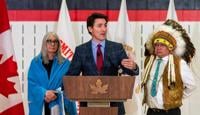
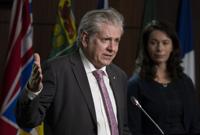
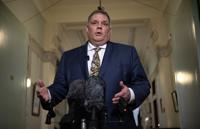
On Friday, Jean-Claude D’Amours, minister of post-secondary education, training and labour, highlighted the new office tasked with tracking the government's response to 86 recommendations made by former systemic racism commissioner Manju Varma three years ago.
“Our immediate goal for the office is to continue the work to address the recommendations in the report while building key partnerships,� D’Amours told reporters. “In the longer term, we will develop a more robust anti-racism action plan in collaboration with those partners.�
D'Amours was vague about which of the recommendations the government would pursue, however. Following the news conference, the government launched a website tracking its progress. The site said most recommendations are underway, completed, or about to begin, but lists 19 items under the "other" category.
Those items include Varma's call for a task force to dismantle systemic racism in New Brunswick policing, and for the province to address recommendations from a pair of coroner’s inquests into the deaths of two Indigenous people killed by police in 2020.Â
Rodney Levi was shot and killed by RCMP in Sunny Corner, N.B., about 30 kilometres west of Miramichi, in June 2020. The coroner's inquest ruled the death a homicide and made a slew of recommendations, including that the RCMP not be the first responders during mental wellness checks on First Nations. Chantel Moore was shot and killed during a wellness check by Edmundston Police that same month. The coroner’s recommendations in her case included more training for police and for them to increase their use of less lethal tools.
Their deaths prompted outrage and calls from First Nations for an independent inquiry into systemic racism in the justice system. The Liberals, then in Opposition, called for one in the legislature, but the former Progressive Conservative government of Blaine Higgs rejected it in favour of the 2022 systemic racism report. The Tories never made a formal response to Varma's report and the Liberals promised one during the 2024 election campaign, which they won.Â
Now, more than one year after taking office, the Liberals say the recommendation for a public inquiry is under additional consideration.
"A meeting between Indigenous and provincial leadership has brought to attention that there is more work to be done beyond (Varma's) report," says a note on the website tracking the government's response to the 86 recommendations. "This includes a renewed call for an Indigenous-led public inquiry into systemic racism against Indigenous people.â€�Â
That response wasn't good enough for Bill Ward, chief of the Metepenagiag First Nation, who responded in a statement provided by Mi’gmawe’l Tplu’taqnn Inc. (MTI), a non-profit created by nine New Brunswick First Nations.Â
“Six years after the death of Rodney Levi and Chantal Moore and the government of New Brunswick continues to ignore many of the recommendations made by us and our community members to address systemic racism."
“Our call for an Indigenous-led public inquiry into the systemic racism in the justice (system) remains. If the province had accepted this in 2020, we could be well on our way to see improvements when it comes to racism in this province.�
On the policing task force, the government’s website says the anti-racism office will “continue to collaborate with various stakeholders such as Justice and Public Safety to identify opportunities to address all forms of racism.�
MTI said in a statement Friday that it worked with the racism commissioner at first but political interference watered down the final report released in 2022. It says it expressed its concerns to the government two years ago but has never had a meeting to discuss the matter. It said it and the chiefs were not asked for input into the recommendation updates released Friday or the creation of the anti-racism office.Â
“By lumping all racialized groups together, the government … seems to think that the needs and challenges of all minority communities are the same. This perpetuates the paternalistic approach the provincial government uses against Indigenous peoples in New Brunswick,â€� George Ginnish, Chief of Natoaganeg First Nation and MTI co-chair, said in the statement.Â
MTI said some programs have improved the justice system for Indigenous people, but said without knowing the extent of systemic racism, it makes it difficult, if not impossible, to bring forth an improvement plan.Â
The government says work has begun, or been completed, on 59 per cent of the recommendations and it has identified another 19 per cent that it will initiate. They include a pledge for more education for government officials; the creation of a strategic plan to combat hate and discrimination; additional support for the New Brunswick Human Rights Commission; more racial representation on agencies, boards and commissions; more attention for First Nations health issues; and more public education programs.
D’Amours said he’s not fully closing the door on any recommendation. “(The office) is going to be there to co-operate and listen and we'll be open to considering things that have not been considered to date."
This report by ºÃÉ«tvwas first published Jan. 16, 2026.
— By Devin Stevens in Halifax