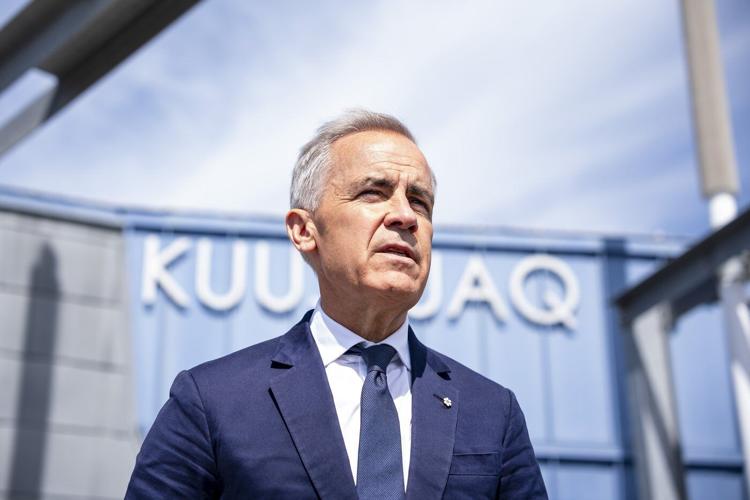

WASHINGTON - Prime Minister Mark Carney said Tuesday he doesn't expect any drama as officials from Canada, the United States and Mexico prepare for a virtual call Wednesday about the future of the critical continental trade agreement.
"We're expecting, you know, a constructive exchange. I wouldn't expect any drama tomorrow," Carney told reporters in Kuujjuaq, Que. "I'm not looking for my pen."
The United States is set to officially inform Canada and Mexico on Wednesday of its intentions for the continental trade agreement, known in Canada as CUSMA. All signs indicate Washington will blow past the July 1 date without agreeing to renew the pact.
The July 1 deadline for indicating support for renewal is a mandatory process written into the text of the agreement. CUSMA will remain in place after Wednesday no matter what the Trump administration does.
Canada and Mexico have said they want a 16-year extension.
Once the Trump administration fails to sign on for the longer-term deal, an annual rolling review of the agreement starts and continues for up to 10 years, at which point CUSMA would expire if it's not renewed.
Scott Lincicome, vice-president of general economics at the Washington-based Cato Institute, said the review process 鈥� if it's done right 鈥� offers an opportunity to fix flaws in the agreement and address various bilateral irritants.
"But there's a very wide gulf between fixing a good agreement and torching it," Lincicome said during a Cato panel discussion last week in Washington. "And it's clear which side we should all be on."
Lincicome said that while there's no reason to "freak out" about the U.S. missing this week's deadline, "there is some uncertainty that is increased because of these annual reviews."
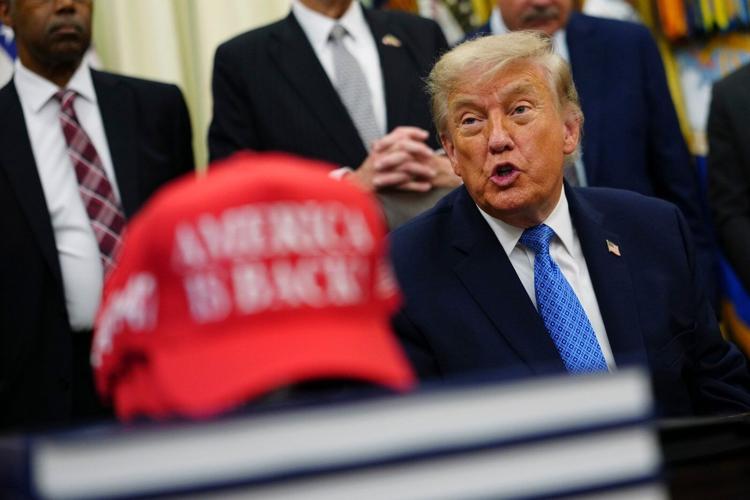
U.S. President Donald Trump has offered mixed messages about the future of the agreement. He told reporters in France where he was attending the G7 summit earlier in June that he would rather "leave it unsigned" or "have it terminated."
When asked to clarify those statements, Trump said, "I would rather not have the agreement but I may sign it."
CUSMA stays in place unless one of the partner countries gives six months' notice that it is pulling out. Canada and Mexico both have indicated they want to keep the trilateral deal in place.
CUSMA was negotiated during the first Trump administration to replace the North American Free Trade Agreement. At the time, Trump called it the best trade agreement ever.
Republican Rep. Adrian Smith said the deal was a huge victory and has been a boon for agriculture producers and American consumers.
Smith, who represents a district in Nevada, said while he's not a fan of tariffs, "I think it's reasonable to expect other countries to make some concessions, you know, having the access to our markets that they have, and they need to give us access to theirs."
"I would say Canada did not expect Mr. Trump re-entering the White House as he is right now," Smith said at the Cato event. "So they're going to have to deal with that."
Trade negotiations between Mexico and the United States have launched but Ottawa and Washington have not started official talks yet.
United States Trade Representative Jamieson Greer has said there are "pillars" of the continental trade pact that work well. He also has said he'd be open to two separate bilateral agreements with Canada and Mexico.
The continental trade agreement has shielded Canada and Mexico from many of Trump's tariffs. The current global 10 per cent U.S. duty does not apply to CUSMA-compliant goods.
Canada's former chief trade negotiator Steve Verheul said the CUSMA tariff exemption shows the United States "does attach a considerable amount of importance" to the deal.
There's also support from American industries, the public and many Republican lawmakers, Verheul said at an event for Bank of Montreal clients Monday. A bipartisan group of more than 100 House lawmakers wrote a letter to the Trump administration in December expressing support for the agreement.
The largest challenge for Canada will be Trump's separate tariffs on industries like steel, aluminum, automobiles and cabinetry, Verheul said.
"I don't think there's been anything close to a good deal on the table so far," he said.
This report by 好色tvwas first published June 30, 2026.