The British Columbia government's efforts to mitigate the impact of the Declaration on the Rights of Indigenous Peoples Act has resulted in a series of climbdowns in the face of opposition from First Nations.
Here's how it has played out:

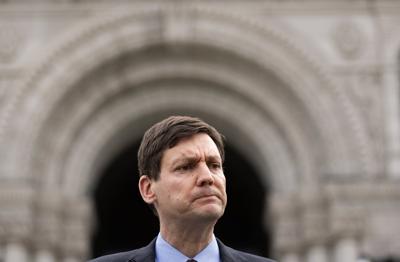
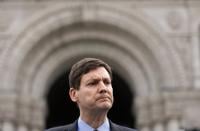
Premier David Eby is joined by fellow MLAs as he speaks during a press conference following the throne speech in Victoria, B.C., on Thursday, Feb. 12, 2026. THE CANADIAN PRESS/Chad Hipolito
CAHThe British Columbia government's efforts to mitigate the impact of the Declaration on the Rights of Indigenous Peoples Act has resulted in a series of climbdowns in the face of opposition from First Nations.
Here's how it has played out:
Nov. 28, 2019: The Declaration on the Rights of Indigenous Peoples Act, known as DRIPA, is unanimously adopted by the B.C. legislature. It is intended to reflect the United Nations Declaration on the Rights of Indigenous Peoples, which says governments should obtain "free, prior and informed consent" from Indigenous peoples on legislation that affects them.
Nov. 23, 2021: Then-attorney general David Eby introduces changes to the Interpretation Act, which governs how legislation is implemented in B.C. The changes say "every act and regulation must be construed as being consistent with the declaration (DRIPA)."
Dec. 5, 2025: The B.C. Court of Appeal issues a ruling on the so-called Gitxaala mineral rights case. It says B.C.鈥檚 mineral claims regime is inconsistent with UNDRIP, and that DRIPA must be "properly interpreted" to incorporate UNDRIP into B.C.'s laws "with immediate legal effect."
Jan. 20, 2026: Eby says DRIPA needs to be amended in light of the Gitxaala ruling, saying it has created confusion about the declaration act. First Nations leaders later reject the idea of any changes to the act.
April 1: Eby says amending DRIPA in light of the Gitxaala ruling is "non-negotiable," and that the province faces significant legal liabilities if it is not changed.
April 2: The government changes course, dropping the plan to amend DRIPA in favour of a three-year suspension of its key elements, in order to give the Supreme Court of Canada time to rule on the government's appeal of the Gitxaala case. First Nations meet Eby and accuse him of "absolute betrayal" and colonialism. Eby says the suspension bill will be a confidence vote, meaning his government, which has a one-seat majority, falls if it fails.
April 8: Eby says the three Indigenous legislators in the NDP caucus will support the DRIPA suspension.
April 10: Grand Chief Stewart Phillip says his wife, MLA Joan Phillip, doesn't support the suspension bill.
April 13: The government drops plans to imminently table the suspension act and says that when it is tabled 鈥� some time during the current legislative session 鈥� it will not be a confidence vote.
April 19: First Nations leadership sources say the government plans to table the suspension bill on April 20. They vow to protest and urge MLAs to reject it. Hours later, the government backs down again and announces the suspension bill will not be tabled in the current legislative session. Eby meets First Nations leaders and a leaked document shows the government is now proposing to work with First Nations on how to implement DRIPA.
This report by 好色tvwas first published April 20, 2026.
The 好色tv Press
Get the latest from 好色tvNews in your inbox. Select the emails you're interested in below.


Sorry, an error occurred.
Already Subscribed!
Cancel anytime
Thank you .
Your account has been registered, and you are now logged in.
Check your email for details.
Submitting this form below will send a message to your email with a link to change your password.
An email message containing instructions on how to reset your password has been sent to the email address listed on your account.
No promotional rates found.
Secure & Encrypted
Thank you.
Your gift purchase was successful! Your purchase was successful, and you are now logged in.
| Rate: | |
| Tax: | |
| Today's total: | |
| Begins: | |
| Transaction ID: |
A receipt was sent to your email.