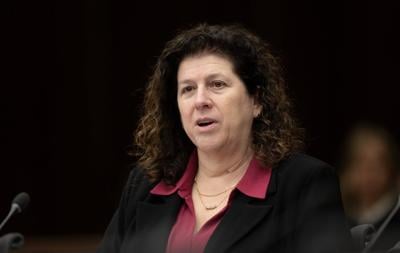

OTTAWA - Immigration, Refugees and Citizenship Canada should not allow budget constraints to limit how many investigations are done when a student visa is flagged for potential violations, the deputy minister told a House of Commons committee on Monday.
Ted Gallivan was at the immigration committee following a March 23 report by the auditor general which found "critical weaknesses" in integrity controls of student visas.
"In our management action plan, we are making a commitment to review all of the cases. Where it's confirmed that it's not a discrepancy but actual fraud, we need to take action and we'll have to sort out the budget implications after the fact," Gallivan said.
Auditor General Karen Hogan's report found thousands of potentially problematic student visas were not being investigated, including more than 150,000 cases between 2023 and 2024 of international students potentially not complying with the terms of their visa. In many cases that means not attending the school they were accepted to, for which the visa was issued.
Department officials told the auditor only about 4,000 of these cases were investigated due to budget constraints. Of these cases, 1,600 were marked as inconclusive because students didn't respond to two question attempts from the immigration department over six months.聽
Gallivan, who began his time as deputy minister the same day Hogan's report was published, shared an action plan with the committee to address issues raised by the auditor. He said the goal was to fully implement it by the end of 2026.聽
The document was shared with committee members digitally about midway through the hearing.
Hogan told the committee her study found the greater focus of the department seemed to be clearing applications, but more rigour is needed through the entire visa process including when the documents expire.
"This is all information they had, just information they need to compile and then act on," Hogan told the committee.聽
Hogan had not seen the department's action plan at the time of her testimony, but said she looks forward to reading it. She added her office tends to follow up on its recommendations three years after issuing them to see if action is happening.聽
Gallivan said the department needs to demonstrate that it is working to fix these discrepancies on visas. This includes sorting out cases where there may just be a legitimate mistake on paperwork versus actual fraud.聽
"Where there's real fraud, we ought to be taking action," he said.
The audit also found the department did not follow up on 800 cases of applicants being approved for study permits using bogus documents or misrepresented information between 2018 and 2023.聽
Gallivan said he has not been given an explanation from the department as why no action was taken on these 800 cases.聽
"I have obtained no explanation for why the 800 was not pursued," Gallivan told the committee. "I do know going forward these kinds of cases will be acted on."
Tara Lang, director general for admissibility at Immigration, Refugees and Citizenship Canada, said the 800 problematic cases were found through a quality assurance exercise. She said most cases involved applicants through the now cancelled "Study Direct Stream" and had some kind of fraudulent document as part of their application.聽
Ninety-two per cent of those 800 visa holders went on to apply for some other type of immigration status, and 456 received approvals. This includes 105 getting permanent residency.聽
"Now, every single case does have an info alert placed on it and they are being reviewed, currently," Lang told the committee.聽
Gallivan said his assessment is that the department didn't have a framework for dealing with potential fraud in student applications.聽
"I think the department hadn't kind of thought through what are the interventions required to make sure that students follow the rules and that they depart the country when their student visa expired," Gallivan said.聽
Hogan's audit found only about 16,000 of the 39,5000 international students with expiring visas in 2024 actually left Canada. This was done by working with the Canada Border Services Agency.
Gallivan said the department is developing digital solutions to track if a temporary resident is still in Canada or not, and he was surprised that such a system didn't already exist.聽
He added that more work will be done to tell people with expiring visas and no other reason to remain in Canada that it's time to leave, including stressing the consequences. This can include a five-year ban from entering Canada if someone overstays a visa.
Both the immigration department and CBSA plan on working more closely on tracking the exit of temporary residents in the future.聽
Gallivan said the department is working on more information technology solutions to better manage the student visa program. This includes developing machine learning to recognize diplomas for different institutions to help identify fraudulent documents.聽
"I do think some of the investments we continue to make in IT and this idea of control lets us pass the legitimate students through more quickly, which we need to do, and at the same time flag those that need greater scrutiny," he said.
Hogan said in both her report and at the committee that the department has the tools to investigate and deal problematic files, but it needs to use them.聽
This report by 好色tvwas first published April 20, 2026.聽