OTTAWA - Hovering between a camera and computer in a darkened Ottawa-area photo lab in 2021, Mylène Choquette had to step away to make sure her eyes weren’t fooling her.
The equipment had just taken the art analyst layers beneath the surface of a painting some were alleging famed Indigenous artist Norval Morrisseau had made. To the naked, untrained eye, it sure looked like a Morrisseau with its bold shapes and thick black lines juxtaposed on a bright backdrop.
But under the reds and light blues was the outline of an animalistic figure.
The outline wasn’t the surprise. Artists often sketch their impending creations onto a canvas before picking up a paint brush.
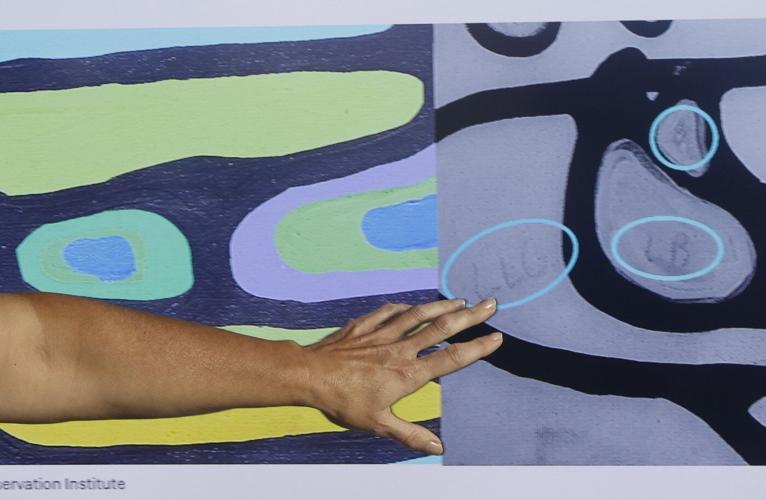
It was the array of letters — R, LB — speckled across each part of the painting that took Choquette aback.
She looked back at the original and it took almost no time to realize what the letters stood for. The R was marked on a red patch, the LB on a light blue one.
Could it be that someone had put a paint by numbers-like guide to creating the artwork right on the canvas? That’s what Choquette’s eyes were suggesting but she had to be sure.
After all, this was not just any painting.
It was one of many at the centre of what would become the biggest art fraud case in Canada’s history, an epic drama that has spanned court and police interrogation rooms as well as the country’s loftiest art galleries and museums.
The saga has indelibly shaped the legacy of one of the nation’s most celebrated Indigenous artists, removing at least 1,000 fake Morrisseaus from the market.
Police think more could be out there. One lawyer estimates there are at least 6,000 fake Morrisseaus still in circulation.
Choquette’s contribution came in 2020, when the Ontario Provincial Police contacted her employer, the ºÃɫtv Conservation Institute.
The little-known federal government entity is a carve-out of the Heritage Department and a bit of a Swiss army knife. It fills gaps in the investigation, preservation and conservation process for 2,700 museums, libraries and archival organizations in Canada, saving each from having to fund their own version of the institute.
Want help determining what stained a hockey sweater Maurice (Rocket) Richard wore in the 1959 playoffs or uncovering the history behind ancient tools melting out of Yukon ice patches? Need advice on how to transport and preserve a 356-year-old Hudson’s Bay charter? Looking for someone to restore stained glass panels from the wreck of 1914’s sunken Empress of Ireland ship? If you’re a public institution, the conservation institute’s 65 staff can likely help.
But seldom is the team ever called on by police to unravel the kind of investigative beast the Morrisseau saga was turning out to be.
The police turned to the institute decades after pieces purportedly by the artist started quietly flooding the art market.
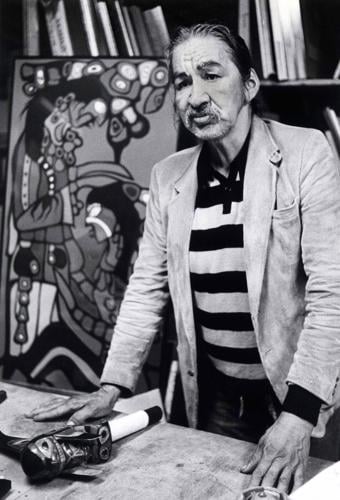
By then, Morrisseau, a residential school survivor raised on a reserve on the shores of Lake Nipigon in Ontario, was considered the Picasso of the North.
He was credited with the birth of the Woodland School, a distinct style of art that used striking interconnected black lines on vibrant backgrounds to depict spiritual figures and stories.
His 1962 exhibition at the Pollock Gallery in Toronto had marked the first time the work of an Indigenous artist was on display in a contemporary art gallery in Canada.
While he struggled with alcohol abuse and had Parkinson’s disease until his 2007 death at 75, his work was growing more desirable every year. Some of his paintings were selling in the hundreds of thousands of dollars.
It’s unclear when Morrisseau himself spotted the first fake, but his lawyers wrote letters in the 2000s insisting significant numbers of paintings being sold through Toronto art gallery Maslak McLeod and others in Ontario and Alberta were frauds.
Shortly before his death, he also issued a press release making it clear he was not involved with the Morrisseau Family Foundation, an organization his seven children had formed to authenticate his paintings. The foundation’s seal was later found on authentication certificates trying to lend credibility to fake Morrisseaus.
Despite his efforts, the fakes kept coming.
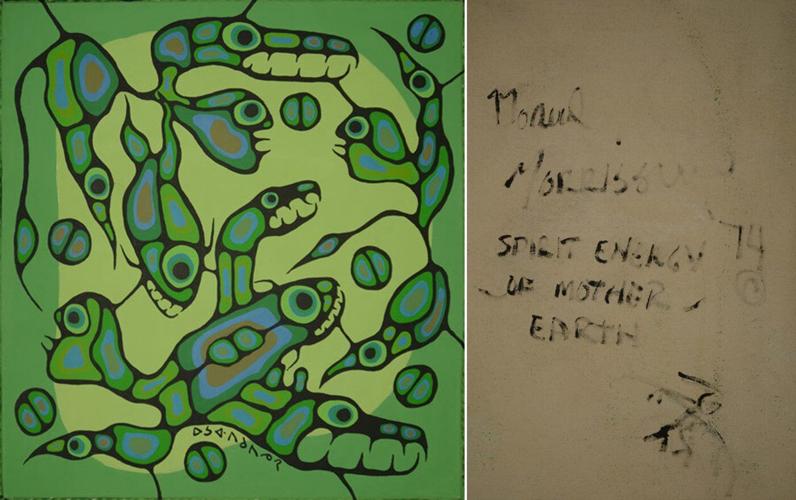
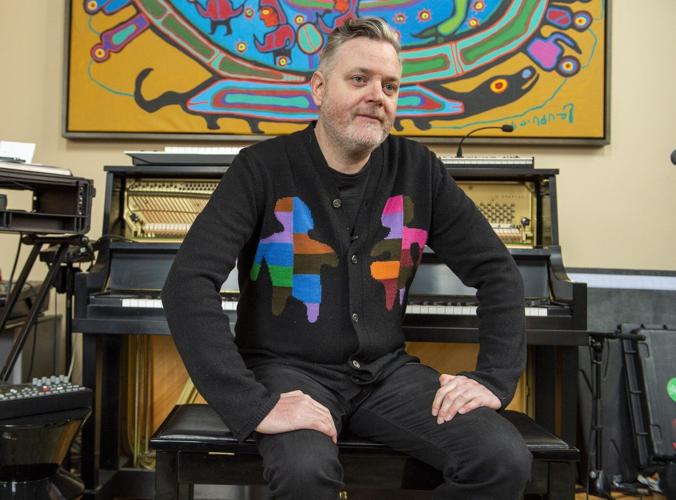
Eventually, one was bought in 2005 from Maslak McLeod by Kevin Hearn, the keyboardist for rock band Barenaked Ladies, who fell in love with Morrisseau’s work when it graced the cover of a 1979 Bruce Cockburn album. His purchase was “Spirit Energy of Mother Earth,” which arranged serpent-like formations on a backdrop of greens and blues and was said to date back to 1974.
Hearn lent the piece to the Art Gallery of Ontario in 2010 for an exhibit. Less than two weeks later, curator Gerald McMaster had taken it down, believing the painting was inauthentic.
Hearn decided to follow McMaster's hunch, unknowingly cracking open what would be a lengthy saga to determine if his painting was a real Morrisseau and identify other fakes.
Hearn and his lawyer Jonathan Sommer ultimately discovered persuasive evidence that Morrisseau hadn’t painted the piece. For starters, the list of three prior owners Maslak McLeod had provided featured two people who had never seen the piece, let alone owned it.
The dry brush signature and thunderbird — a reference to Morrisseau’s Indigenous name, Copper Thunderbird — on the back of the painting were also not the signs of authenticity Maslak McLeod had framed them as. Morrisseau experts and acquaintances said the artist didn’t sign the back of his paintings, instead preferring to mark the front of his pieces with a syllabic signature.
Hearn sued Maslak McLeod and its owner Joseph McLeod, who called the allegations against him and his business "scandalous, frivolous and vexatious."
In a statement of defence filed with a court in 2013, the gallery and its owner said accusations that they had taken part in a widespread criminal fraud scheme are "entirely false."
As the case was winding its way through court, the gallery closed and McLeod died in 2017.
His estate later replaced McLeod on the case. While it didn't keep defending his actions, it also didn't concede defeat, encouraging interveners to join the defence.
Later, the Ontario court essentially declared the case a tie, ruling it couldn’t determine whether Hearn’s painting was authentic.
But in 2019, the decision was overturned by the Ontario Court of Appeal, in part because the original judge was found to be ignoring expert testimony and relying on his own research instead. Hearn was awarded $60,000, though he’s never been able to collect it.
His battle inspired the 2019 documentary “There Are No Fakes,” piquing the interest of the Thunder Bay Police.
Sommer had been urging them to investigate for years. Finally, they heeded the advice and enlisted the help of the Ontario Provincial Police.
Over two-and-a-half years, police took 271 statements across Canada and the United States and reviewed more than 17 terabytes of data, lead investigator Jason Rybak said at a March 2023 press conference.
Thunder Bay Police and the Ontario Provincial Police declined The ºÃɫtv Press’ request to discuss the case “to preserve the integrity of the judicial process.”
Initially, the conservation institute agreed to look at just four of the suspected fakes. It was confident it could do the work, because staff were already in the middle of examining Morrisseau’s paintings as part of periodic reviews they undertake to study some creators in depth.
The process can involve many layers of technical and cultural analysis and often ends with a journal article being written on the hallmarks of an artist’s creations. That Morrisseau project is still ongoing.
When the police came calling, the institute didn’t want to be tasked with examining every dubious Morrisseau painting. After all, there were supposedly a lot out there and the painstaking analysis performed by the institute is time-consuming.
To get a sense of just how tedious their duties can be, one needs to look no further than what happened when the four alleged Morrisseaus arrived — rolled up — in 2021.
The tubes were a “distressing” sight for the institute, senior conservation scientist Jennifer Poulin recalled. Paint can crack and the entire work can become permanently coiled when it’s rolled.
Not knowing whether they’d be real or fakes, the institute brought them immediately into one of its temperature- and humidity-controlled labs, where it took a conservator a month to unroll them. Every day, as the police regularly sought updates, another one or two inches were unspooled.
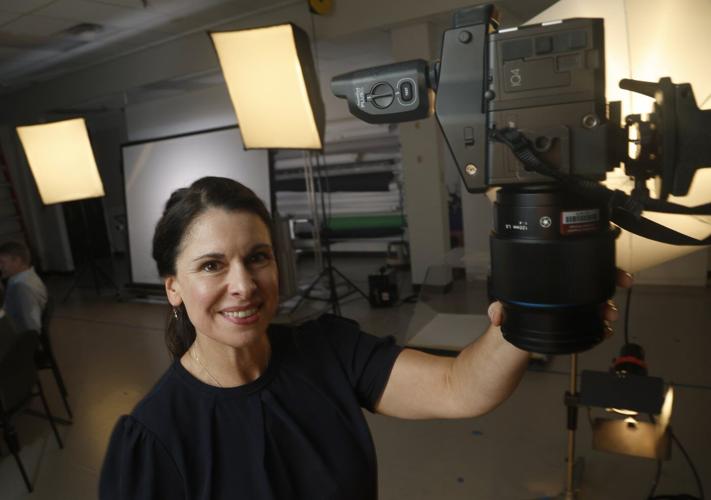
When the institute finally got them unrolled, Choquette, the senior scientific documentation technologist, was the first of the seven-person team dedicated to the project to get a crack at the paintings.
She placed them under a camera that can capture infrared spectrums, revealing the letters R and LB that someone had seemingly left as painting instructions on the canvas.
The institute had looked at other Morrisseaus from the Royal Ontario Museum, the McMichael ºÃɫtv Art Collection and the Thunder Bay Art Gallery, which had been proven to be real. Importantly, they had no colour codes beneath them.
“I needed to just step away from the setup and just come back to see if I see it again,” Choquette said of the moment she spotted the codes. “Indeed, it was still there.”
She beckoned for Poulin and Kate Helwig, then the institute’s senior conservation scientist. Take a look, she said, without mentioning her discovery.
They saw what she did.
“We were very stunned,” Choquette said.
The more they looked, the more signs they saw of painting instructions.
There were arrows indicating where one colour should take over for another in the backdrop and, in at least one of the paintings, the creator went even further than using letter codes.
They spelled it out. “Medium green.”
But in art investigations, the discovery of something uncharacteristic for an artist is seldom a smoking gun.
You might have just stumbled upon the one or few times the artist strayed from their habits. Maybe they were experimenting and just never stuck with the methods you uncovered, making your painting an outlier.
More often than not, they’re not alive to explain or discredit findings and haven’t left voluminous details behind on every quirk in their paintings.
Sommer, Hearn’s lawyer who has made a name for himself by taking on art frauds, says this is why anyone looking to prove a painting’s authenticity has to look at the “whole constellation” surrounding a piece.
Often, that means tracing and verifying a painting’s provenance — art lingo for its history — and taking a deep, detailed dive into the materials used to create it.
Art scientists have become so good at this work that they can now take the wood used to stretch a canvas, create a numerical code from its sequence of tree rings and compare that to historical growth patterns, Sommer said.
“Then, you can date the wood for not only when it comes from, but even where,” he said. “Sometimes you can find that a wooden sculpture is claimed to be from 1820 but the tree rings in it show that it was actually from 2007.”
The institute didn’t bother with the wood, nor the dry brush signature on the back of the paintings. The police had never asked for an analysis of them, so the institute focused only on the paints and what was underneath them, Poulin said.
It was in her lab that a speck of paint from one of the suspected fakes was carefully removed with a surgical scalpel after much practice on test canvases.
The speck was a few micrograms — so small you need fixed concentration to see it with the naked eye from a very short distance.
To avoid damaging the work, these specks are often taken from cracks already forming in the piece or unassuming areas along the painting’s fringes, where they’d barely be noticeable.
Poulin was able to work out that the speck contained polyvinyl acetate, styrene and acrylic.
The confirmed Morrisseaus had no such mixture. They were composed entirely of acrylic.
It was enough to call back the police, who were so impressed they wanted more.
From fall 2021 to winter 2023, the institute took on another 26 paintings attributed to Morrisseau, ultimately spending 1,400 hours on the project. It compiled a report detailing all its findings.
Within two days of the police getting it, they assembled 98 officers to arrest and charge eight people across three suspected fraud rings. They laid 40 charges, including forgery, defrauding the public over $5,000 and uttering a forged document.
Police alleged that one of those charged, David Voss, was “the architect” behind a group that began creating fake Morrisseaus through an assembly line of paintings as early as 1996.
Another accused, Gary Lamont, had allegedly recruited two Indigenous artists, including Morrisseau’s nephew Benji, who was also charged, to create fakes.
A third group cropped up in 2008, allegedly providing false information about the paintings’ authenticity and origins.
“These are not small, victimless crimes,” Det. Insp. Kevin Veillieux said at the 2023 press conference announcing the charges. “These are people that took advantage of one man's legacy in order to turn a profit for themselves.”
Together, police alleged, the rings had created at least 1,000 fakes.
Four of the accused eventually pleaded guilty. Benji Morrisseau also admitted guilt and his case was addressed through a First Nations restorative justice program. Charges against two others were dropped.
One man's case went to trial, and institute representatives testified for the prosecution. A jury found the accused, Jeff Cowan, guilty of fraud and dealing forged documents.
Apart from in the courtroom, the institute never spoke publicly about the work it was doing. Determined to maintain the integrity of the investigation, it kept things so under wraps that computer files were sealed and some of its own employees had no idea what work their colleagues were doing.
Earlier this month, the institute invited ºÃɫtvto its high-security facility, an aging government building south of the St. Laurent Shopping Centre in Ottawa. On the roof sits a statue of a seafarer the institute affectionately calls Capt. Conservation. He is believed to have been rescued around the eighties from a closing restaurant. In the 2000s, the institute built a time capsule in his foot.
Inside the building, a maze of yellowing walls and staircases leads to a vault and labs dotted with complex equipment, retro paint tubes and textiles and curious staff members poring over some of Canada’s most revered treasures.
The institute wanted to share its contribution to the Morrisseau saga because it thought the public ought to know about some of the work quietly shaping how we understand our history.
But it also wanted to try to wipe some of the stain from Morrisseau’s legacy and help lay the groundwork for healing.
“Norval Morrisseau is one of the most important artists in Canada and his work is culturally significant to every single one of us,” Poulin said.
“And when an artist like that is picked out and abused and treated this way, it affects the entire country. And it's really important that we're able to try to stop this in any way that we can.”
Sommer agrees.
"Norval Morrisseau worked so hard to create this brand new style of art ... and he created his own language. And if there's a whole bunch of fakes in the market, then that language is destroyed. It's turned into just a bunch of superficial ways of assembling colours and motifs."
A few years ago, he calculated that he had devoted 7,000 pro bono hours and at least $1 million in labour to fighting for the truth behind all the paintings claiming to be Morrisseau originals.
Seldom has this work been easy. At one time, he called dentists, begging them to X-ray Hearn’s painting, so he could try to uncover evidence of the sort Choquette eventually found. No one agreed.
Though Sommer said the Thunder Bay Art Gallery eventually got Hearn’s painting seen by the institute, works owned by private collectors aren’t covered by the institute's mandate and no one else in Canada really runs a service that can look as deeply at a painting.
“The only labs I'm aware of are in the States, and you better be ready to write a big cheque, because it's not cheap,” Sommer said.
“If you have artworks that are worth under $25,000, there's no rational economic sense to having them looked at. If you have multi-million dollar works, then maybe, but below that it just wouldn't be justified. You can't spend $100,000 in lab fees on a $20,000 painting.”
Even if you’re able to overlook the financials, you have to be willing to put your pride aside, too.
The embarrassment that can come with being duped often means no one wants to admit their prized possession could be a fraud, Sommer said. If they surrender themselves to the possibility anyway and wind up being told they have a fake, no one will want to buy it, making the chances of recouping the cash spent on the original purchase and investigative efforts even more futile.
And if they try to go after whoever sold them the fake, the court doesn’t make it easy for the accuser.
The obligation is on the accuser to convince a judge — who, if you’re lucky is at least a hobbyist painter, but more often than not, is a complete layperson when it comes to art — that the artwork is fake, Sommer said.
“There's this burden, it's not an insurmountable burden, but in practical terms, it often turns out to be, and the Hearn case was a great example of that,” he said.
So how can Canada make it easier to tackle art fraud?
Sommer suggests art buyers insist dealers sign guarantees of authenticity, which would make it easier for them to hold sellers liable if purchased works wind up being fake.
The country can also form a dedicated, national police body to tackle art investigations and compile a database where people voluntarily register artworks and offer identifying details like surface mapping or notes such as a dry brush signature.
"I pitched this to the ºÃɫtv Senate and to ºÃɫtv politicians. No one seems interested at all,” he said.
To help get more frauds taken off the market, Sommer formed investigation firm Art Experts Canada in 2023. Originally, it was just specializing in Morrisseaus. Now, it handles works by Maud Lewis and is soon to expand to A.Y. Jackson and Tom Thomson.
When he tells people what he does at cocktail parties, they’re always surprised there’s a big enough need for his business — and that the need doesn’t just stem from people with deep pockets.
“The Norval Morrisseau story, I think, it's a shock to so many people because it defeats the sort of preconceived notions people have about art fraud as being this thing that only happens with charming rogues and really dumb, ultra-wealthy people,” Sommer said. “I think for a lot of people it's a bit of an eye-opener.”
Sommer thinks the vast array of police officers, lawyers, historians, academics and artists who have worked on the Morrisseau case have “made good progress in at least showing that this fraud is real and gathering a lot of information about what's real and what isn't.”
“But it's going to take years, decades, maybe a century or more to really clear up the market entirely so that there's no doubt about what's real and isn't."
This report by ºÃɫtvwas first published Aug. 21, 2026.